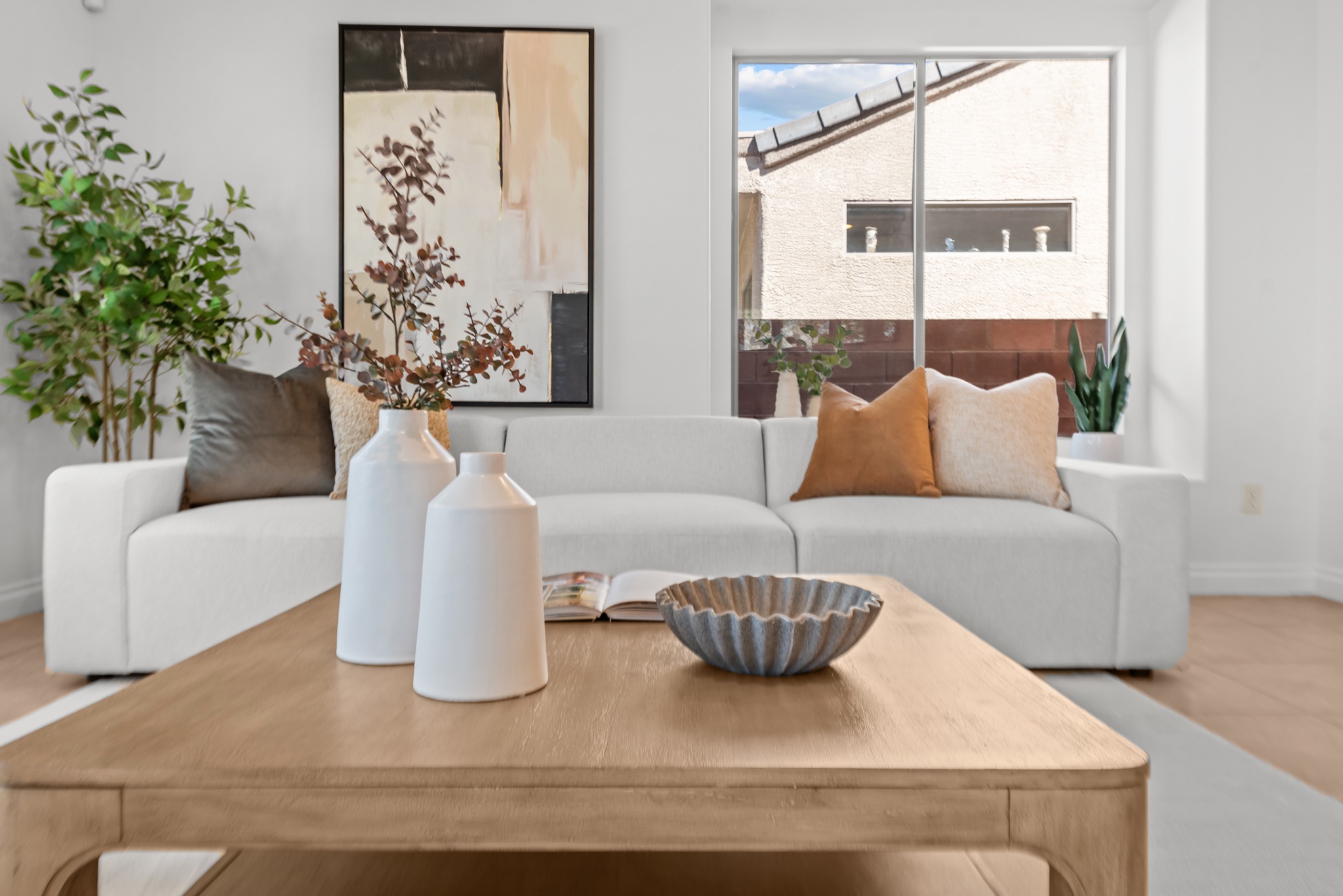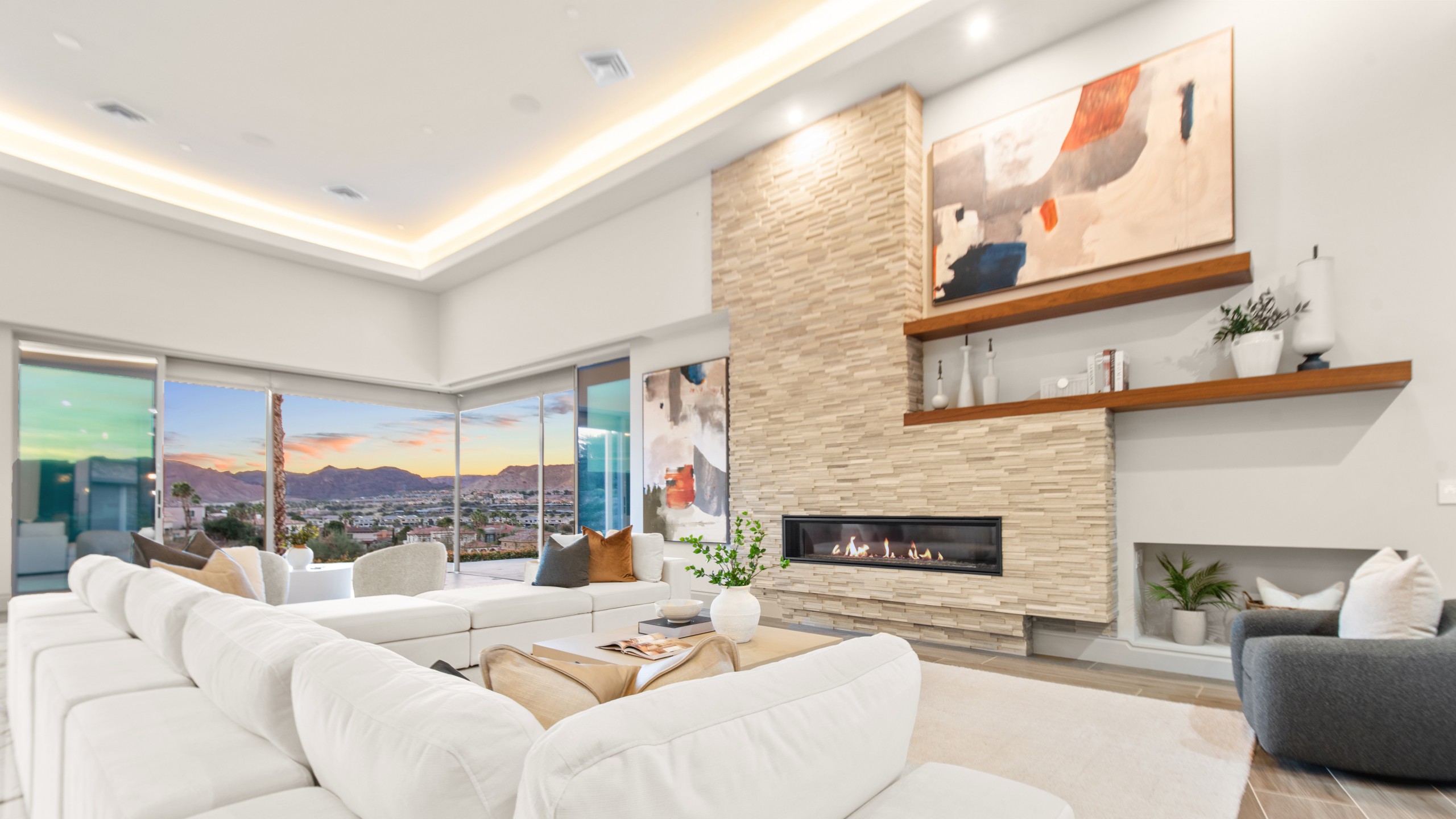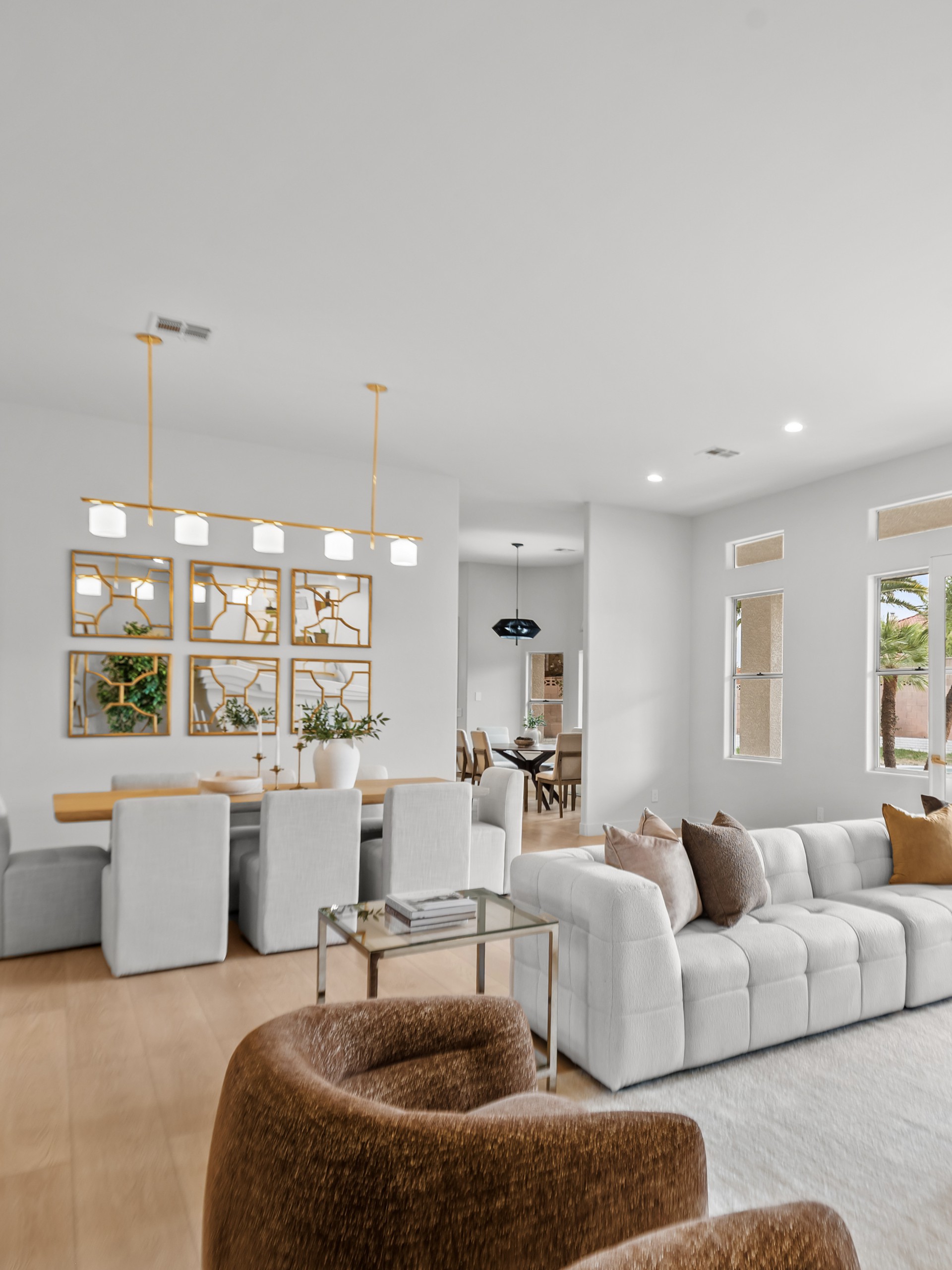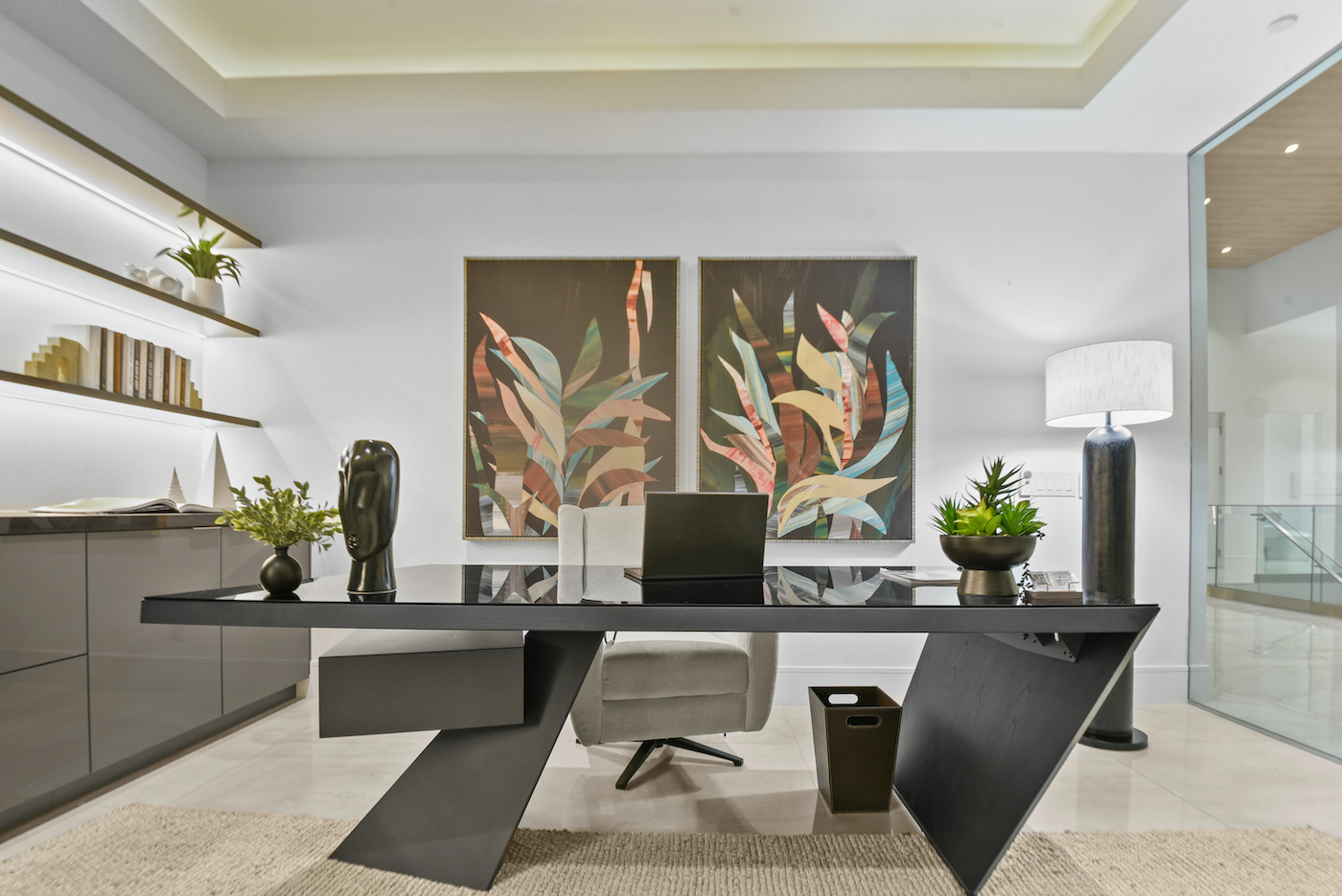
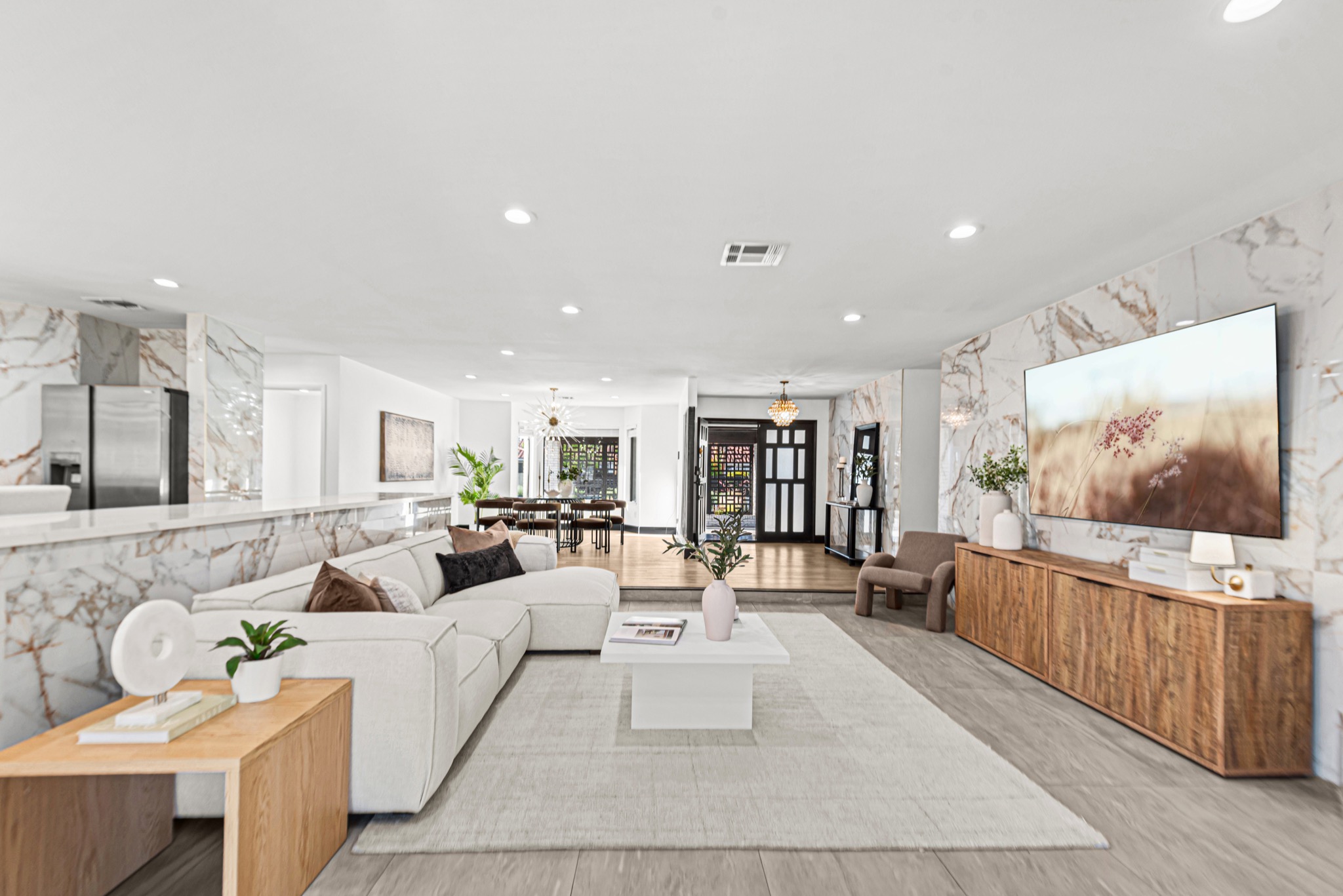
Staging vacant vs occupied homes is one of the first decisions agents and sellers navigate together—and getting it right early leads to better listings, smoother execution, and stronger outcomes.
Vacant or occupied?
It’s not just a logistical choice. It’s a strategic one.
Both approaches can perform well. But they require different levels of control, coordination, and involvement to get there. Helping your clients understand that upfront leads to better decisions, smoother execution, and stronger listings.
Vacant Home Staging
What It Involves
Vacant staging starts with a blank slate. The home is fully furnished to create a complete, optimized presentation:
- Furniture
- Artwork
- Accessories
- Textiles
Each piece is selected based on scale, architecture, and how the home will read in the market.
Typical process:
- Consultation and staging plan
- Inventory selection
- Full installation (typically one day)
- Photography shortly after
- Defined staging term
- Removal at close or term completion
Advantages
Total control. Nothing to work around. Every room is intentional.
Maximum impact. Scale, layout, and styling are optimized from the start.
Consistent presentation. The home stays clean, open, and ready.
Stronger online performance. Photos are clear, defined, and easy to understand.
Optimized execution. Full availability allows for stronger merchandising and a cleaner overall aesthetic.
Considerations
Structured investment. Full furnishing, delivery, installation, and removal are included.
Defined timeline. Staging is installed for a set term, with extensions available if needed.
Light upkeep still required. Even vacant homes should be maintained between showings.
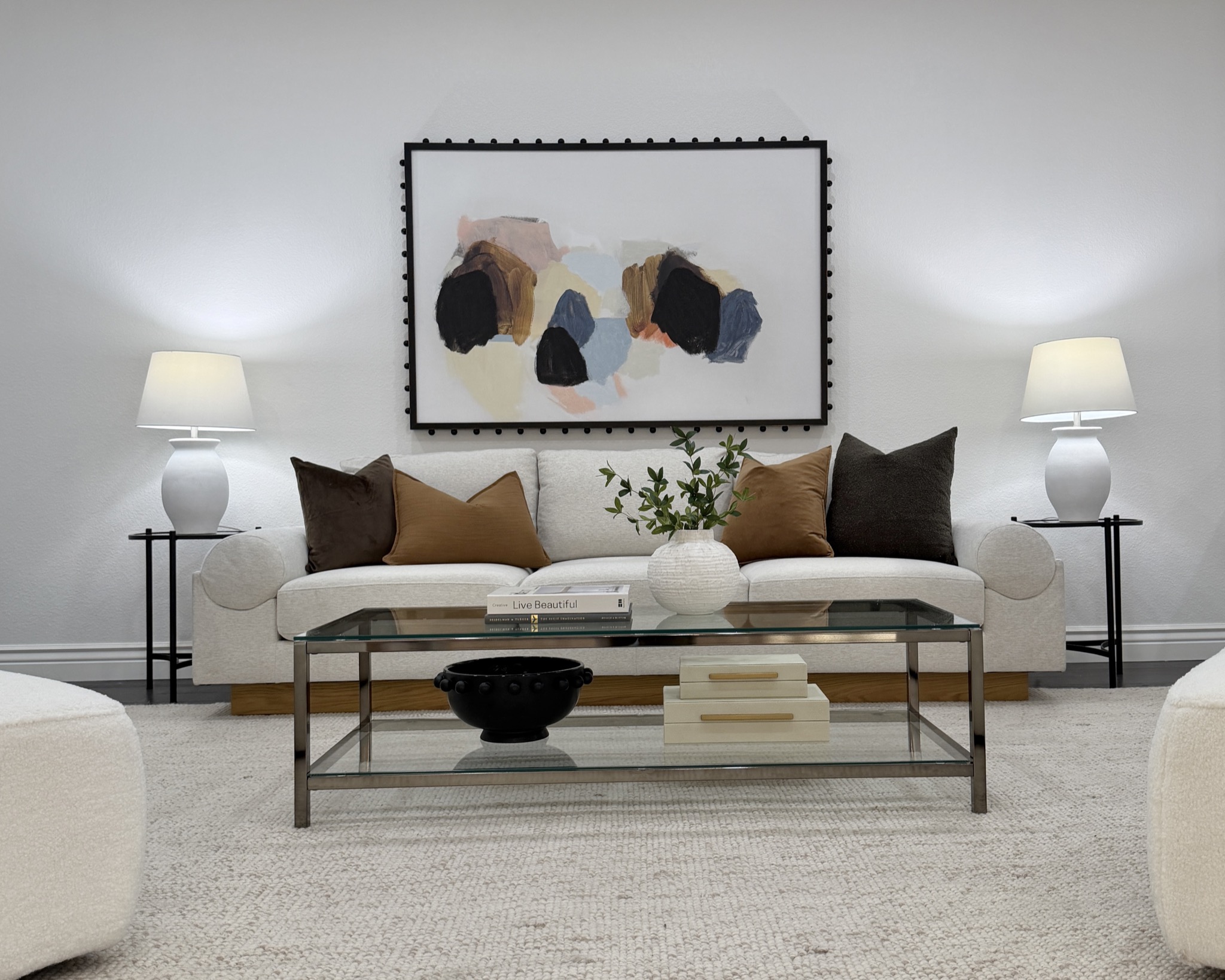
Occupied Home Staging
What It Involves
In today’s market, occupied staging is becoming more common. Many sellers are choosing to list first—before committing to their next move—so they can move forward with more certainty.
Occupied staging works with what’s already in the home, while layering in additional furniture, textiles, and design elements to complete the spaces. It is also the more design-intensive approach.
Instead of starting fresh, the process involves:
- Editing existing furniture
- Reworking layouts for flow and scale
- Introducing key pieces to elevate the space
- Creating a layout that works for both living and photography
More decisions. More time on site. More coordination.
Advantages
Functional for daily living. The home continues to work for the seller.
Flexible structure. No full-furnish reset required.
Highly tailored design. Each space is refined rather than replaced.
Considerations
Seller execution matters. Preparation and follow-through directly impact the result.
Design constraints. Existing furniture can limit layout and scale.
Ongoing maintenance. The home must remain show-ready while being lived in.
More variables. Daily use introduces movement and requires occasional resetting.
Staged items are for presentation only. Any added furniture, rugs, art, and accessories are placed strictly for showcasing the home and are not for use.
Because the home is still being lived in, it’s natural for sellers to fall into everyday habits—sitting on staged pieces, moving items, or using textiles—which can affect both the presentation and the condition of the inventory.
Staging items are part of a curated installation and are expected to remain in place and in their installed condition throughout the staging term. If items are altered or require repair or replacement, those situations are handled as needed to maintain the integrity of the staging.
Setting expectations early keeps the home consistent for showings and helps avoid any interruptions to the presentation.
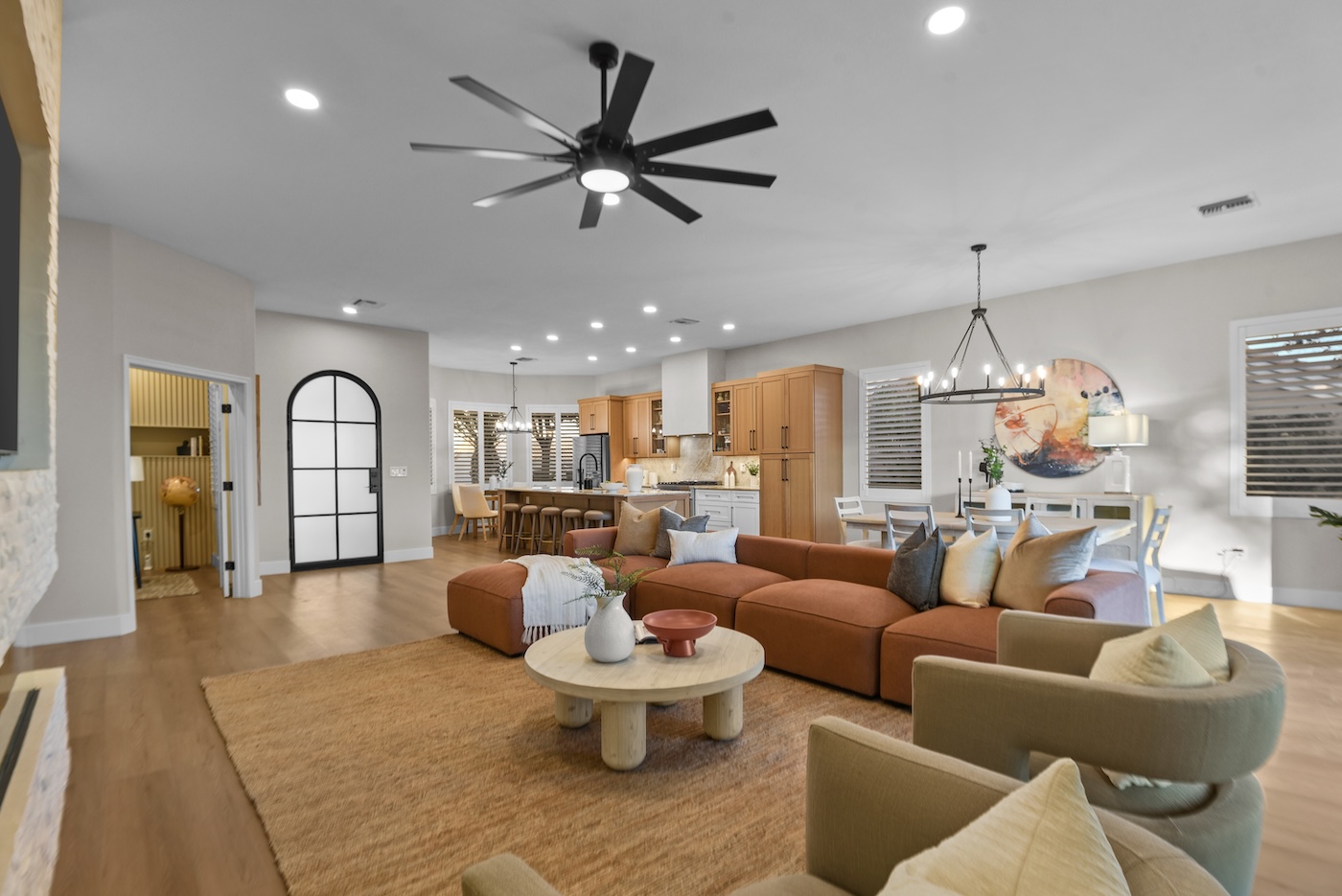
The Role of Clarity in Listing Photos
In today’s market, buyers are deciding online first. Clarity matters.
Empty—or poorly defined—spaces create hesitation:
- What is this room?
- Does it fit my needs?
- How would I actually use it?
That pause is friction. And friction loses buyers.
Staging removes that. Rooms are defined. Layouts make sense. Scale is clear. Buyers don’t have to figure it out—they move through it. And that often determines whether a listing gets shown at all.
Cost Comparison
According to the National Association of Realtors’ Profile of Home Staging, staged homes sell faster and for more than unstaged homes across both vacant and occupied scenarios.
While every home is different, the overall investment is often more similar than expected.
Vacant Staging
- Full furnishing and installation
- Structured investment covering design, inventory, and logistics
- Defined staging term
- Minimal seller involvement
Occupied Staging
- Design-intensive layout and refinement
- Supplemental inventory and styling
- Defined staging term for added pieces
- Greater seller involvement
The scope of work is what ultimately drives cost. Occupied staging often requires more time on site, more detailed editing, and more coordination—particularly in partially occupied homes—bringing the overall investment in line with, or in some cases above, vacant staging.
The decision isn’t about which option costs less—it’s about which approach will present the home most effectively.
Offering Options That Fit the Seller
In many cases, the decision isn’t just about the home—it’s about the seller. Some sellers prefer a fully staged, hands-off process. Others want to maintain a level of comfort while their home is on the market. Both are valid. A well-structured staging approach should allow for that flexibility—while still maintaining the integrity of the presentation.
When Vacant Staging Is Preferred
When possible, staging a home vacant is often the cleaner path. It allows for:
- Less wear and disruption during the listing period
- A more controlled presentation from start to finish
- Fewer variables day-to-day
Occupied homes can absolutely perform well, but they require more coordination and more ongoing management while the home is being shown. For many sellers, the decision comes down to lifestyle. If vacating is an option, it typically simplifies the process and creates a more consistent presentation. If not, occupied staging provides a flexible alternative.
Staging Vacant vs Occupied Homes: Which Approach Is Right?
It comes down to:
- Condition of the home
- Quality of existing furniture
- Target buyer
- Price point
- Seller flexibility
Vacant staging works best when:
- The home is empty
- Maximum impact is the priority
- A controlled, hands-off process is preferred
Occupied staging works best when:
- The seller is living in the home
- Furniture is usable in scale and condition
- Flexibility is needed
- The seller can maintain the space
In most cases, the question is simple: Does the current furniture help—or hurt—the photos?
The Hybrid Option
Some homes benefit from both.
- Remove most existing furniture
- Fully stage key areas
- Simplify secondary rooms
This works when:
- Budget or logistics limit a full reset
- Main spaces drive the listing
- The layout is visually focused
Common Misconceptions
“Occupied staging is just cleaning up.” It’s editing, layering, and design.
“Vacant homes don’t need staging.” They need it most—there’s no scale or context without it.
“I can stage it myself.” Most DIY staging doesn’t translate in photos.
Final Thought
Vacant staging offers control. Occupied staging requires resolution. Both can work. Choosing the right approach early is what makes the difference.
Start with the Right Approach
If you’re helping a client decide between vacant and occupied staging and want a clear direction:
Call Scott at 702-848-3750 or request a free estimate online to discuss the best approach for your listing.