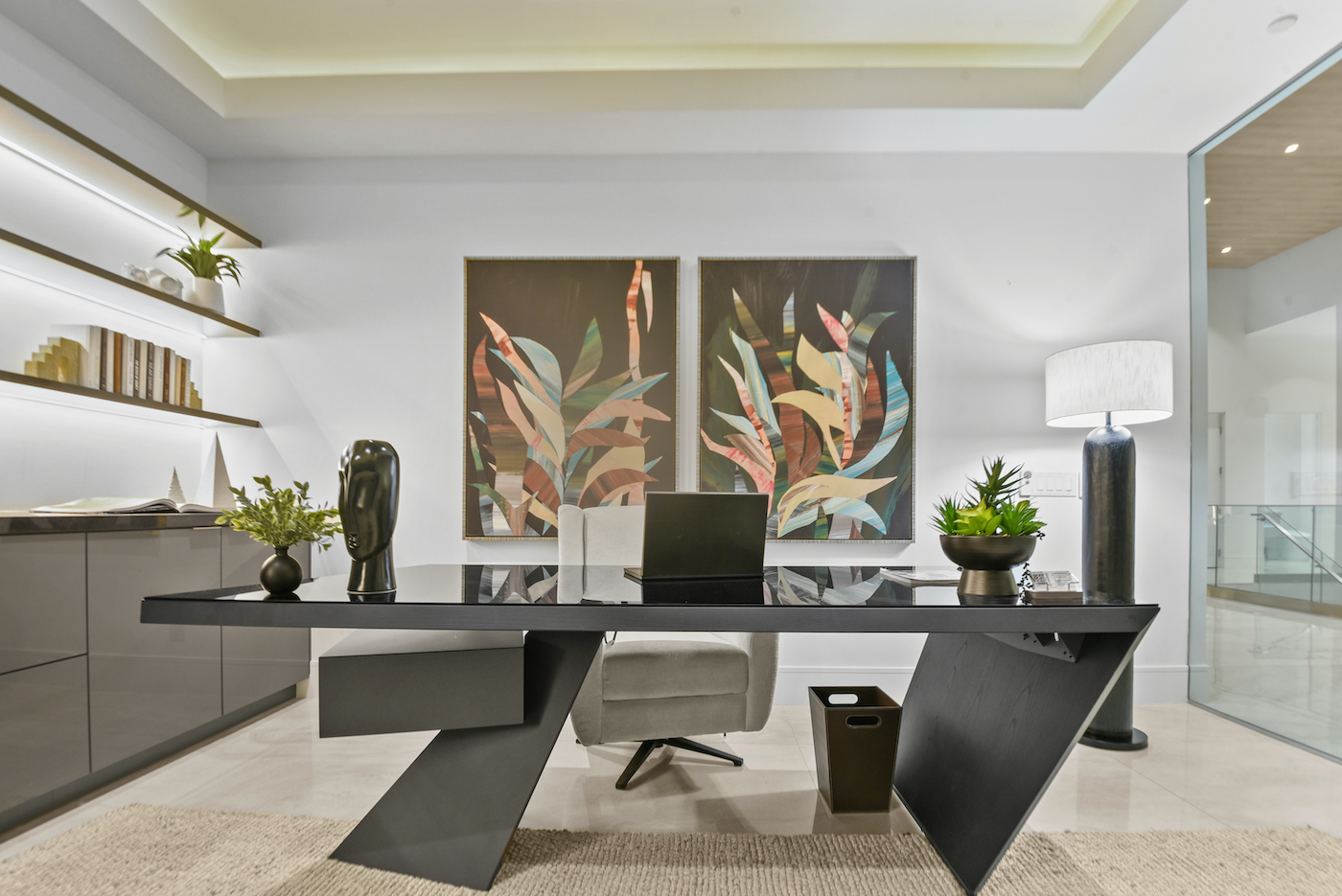

The evolution of home staging over the past five decades has been dramatic.
What began as a practical real estate strategy — clear the clutter, rearrange the furniture, make the home easier for a buyer to imagine living in — has developed into a much more sophisticated discipline involving buyer psychology, photography, architecture, scale, lifestyle, and market positioning.
The biggest change may be the simplest one.
Staging used to be primarily about preparing a home to be shown. Today, it is about preparing a home to be chosen.
That distinction matters because the version of staging many sellers still imagine — neutral paint, a few pieces of furniture, some pillows and accessories — doesn’t fully reflect what professional staging is expected to accomplish in 2026.
Where Home Staging Began
The concept of professional home staging is generally credited to real estate professional Barbara Schwarz, who began developing the practice in the Seattle market during the 1970s.
The original insight was remarkably enduring: buyers don’t experience a property only as square footage, bedrooms, bathrooms, and finishes. They respond emotionally to the environment in front of them.
Early staging was therefore largely about removing obstacles to that connection.
Declutter. Depersonalize. Remove excess furniture. Clean thoroughly. Create enough neutrality that prospective buyers could stop seeing someone else’s home and begin imagining their own.
It was a relatively simple premise, but it changed the way properties were prepared for sale.
Over time, staging developed into its own profession. Training programs emerged, staging businesses began maintaining dedicated furniture inventories, and organizations such as the Real Estate Staging Association helped formalize an industry that had once been treated primarily as an extension of the listing agent’s preparation process.
But the biggest transformation was still ahead.
The Internet Changed What Staging Had to Do
The rise of online real estate search fundamentally changed home staging.
Before buyers could browse dozens of properties from a phone, the front door was often the beginning of the showing.
Today, the showing usually starts with a photograph.
That changed the staging assignment.
A room could no longer simply feel comfortable when someone stood inside it. It also had to communicate its scale, function, architecture, and strongest selling features through a two-dimensional image.
Furniture placement began affecting camera angles. Artwork could help direct the eye. The height of a chair or sofa could either preserve or interrupt a sightline. Too many small accessories could create visual noise that became even more pronounced in photography.
And an empty room that felt spacious in person could appear surprisingly flat online because the buyer had no familiar objects to establish scale.
Professional staging increasingly had to consider two audiences at once:
the buyer standing in the room and the buyer looking at the room on a screen.
That is why great listing photography actually begins before the photographer arrives.
Photography captures the presentation. It cannot create it.
In Las Vegas, that distinction is especially relevant because relocation buyers frequently begin their home search remotely. A buyer moving from California, Arizona, the Pacific Northwest, or another market may form a strong opinion about a property long before scheduling a showing.
The online presentation isn’t simply advertising for the physical tour anymore.
It is the first tour.
Television Raised the Visual Standard
At roughly the same time that real estate search moved online, another cultural shift was occurring.
Home renovation and real estate television exposed millions of consumers to professionally designed and staged interiors.
Buyers became accustomed to seeing the transformation.
They watched awkward rooms become intentional. Empty spaces acquired purpose. Furniture demonstrated scale. Lighting, art, textiles, and accessories changed not only how a property looked, but how viewers interpreted it.
That exposure helped raise expectations for real-world listings.
The National Association of Realtors’ 2025 Profile of Home Staging reflects the continuing influence of television and media on buyer expectations. Buyers increasingly arrive with a visual reference for what a well-presented property should feel like.
Of course, a listing shouldn’t attempt to imitate television.
The more useful lesson is that buyers have become visually sophisticated consumers.
They may not be able to explain why a sofa is the wrong scale, why a room feels disconnected, or why one listing photograph feels more compelling than another.
They simply know which property they want to see.
Utopia Home Staging has had an interesting perspective on that evolution through our work on several HGTV productions, including Flip the Strip, Ugliest House in America, and Sin City Rehab.
Television reinforced something we see every day in real estate: transformation is powerful because it changes perception.
But a listing has an additional requirement television doesn’t.
The transformation has to help sell the property.
That means the architecture, likely buyer, price point, photography, and competitive market all have to matter more than creating a dramatic before-and-after moment.

From Neutral to Narrative
Perhaps the most interesting evolution in modern staging is the movement beyond simple neutrality.
For years, staging advice centered on creating a blank canvas.
There is still wisdom in that. Buyers generally shouldn’t be distracted by highly personal decorating choices, excessive belongings, or a design aesthetic so specific that they struggle to see beyond it.
But a completely blank canvas has its own problem.
It doesn’t make anyone feel anything.
Modern staging aims for something more nuanced: broadly appealing, but emotionally specific.
A primary suite shouldn’t simply demonstrate that a king-size bed fits. It should suggest retreat.
A large kitchen shouldn’t simply contain stools. It should help the buyer imagine mornings at the island and evenings spent entertaining.
A covered patio shouldn’t feel like furniture was carried outside because the staging checklist required it. It should establish a relationship between the home’s interior and outdoor lifestyle.
This is where staging becomes experiential.
Small details contribute to the story: the texture of a textile, the scale of a lamp, a carefully placed book, the negative space around a piece of art, the way a chair turns slightly toward a view.
None of these elements should call attention to themselves.
Together, they create an impression.
This is how life could feel here.
That is very different from decorating.
Interior design is created around the person who already lives in the home. Staging is created around the person who hasn’t discovered it yet.
Why Neutral Staging Has Changed Too
Neutral doesn’t mean beige, empty, or without personality.
In contemporary staging, neutrality is better understood as a strategy for reducing unnecessary objections while still creating emotional interest.
That might mean a neutral foundation layered with warm woods, stone, organic texture, sophisticated textiles, art, and controlled color.
The goal isn’t to eliminate personality.
It’s to eliminate personal specificity.
There is an important difference.
The seller’s favorite color may appeal strongly to a narrow audience. A thoughtfully staged room can instead communicate warmth, sophistication, comfort, energy, or calm without requiring the buyer to share the seller’s personal taste.
The aspiration transfers.
That is one reason staging can work at every price point.
Every home is someone’s dream home.
The job of staging is not to pretend every property is a multimillion-dollar estate. It is to identify what is desirable about this home, for this buyer, at this price point — and make that value easier to see.
The Camera Is Now Part of the Design Process
One of the most important changes in our own staging process has been the increased attention paid to camera angles.
Years ago, staging could be evaluated primarily by walking through the home.
That is no longer enough.
We look at how rooms will be photographed because the buyer’s first experience with the property will likely happen through those images.
Where will the photographer stand?
What will the camera see through the doorway?
Does the furniture establish depth or block it?
Does an adjacent room create a compelling sightline?
Does the primary photograph communicate the room immediately, or does the buyer have to figure out what they’re looking at?
Open-concept homes make these questions even more important because several spaces may appear within a single image.
The staging has to work from multiple directions simultaneously.
Yet there is another side to this.
The property has to deliver in person what the photographs promised online.
Beautiful listing photography may generate the showing. But when the buyer arrives, the home needs to feel as good — or better — than it appeared on the screen.
That continuity builds confidence.
The online presentation creates anticipation. The physical experience confirms it.
When those two experiences align, staging has done its job particularly well.
From Instinct to Measurable Strategy
Professional staging will always involve design judgment. Not every decision can — or should — be reduced to a spreadsheet.
But the industry has become significantly more data-aware.
Days on market, showing activity, price reductions, list-to-sale ratios, competing inventory, buyer feedback, and performance by price tier all provide information that can help refine staging strategy.
At Utopia Home Staging, our own Las Vegas sales data has shown staged properties selling an average of approximately 33 days faster than the broader market baseline and receiving offers approximately 4% higher.
Those numbers don’t mean staging alone caused every outcome.
Pricing, property condition, location, marketing, inventory levels, interest rates, and the skill of the listing agent all influence a sale.
But presentation is one of the important variables sellers can control before a listing goes live.
And increasingly, the question isn’t simply:
Should we stage this house?
It is:
What does this particular house need staging to accomplish?
The Modern Staging Consultation Has Changed Too
The consultation has evolved along with the industry.
A useful staging consultation shouldn’t simply produce a list of things to remove.
It should identify the home’s strengths, potential buyer objections, rooms whose purpose is unclear, furnishings that distort scale, opportunities to improve photography, and areas where relatively small changes could have an outsized impact.
For an occupied home, that may mean editing and repositioning what the seller already owns, then strategically introducing art, lighting, textiles, or accessories where they will make the greatest difference.
For a vacant home, the strategy may involve determining which rooms need to be staged at all.
Not every room deserves equal investment.
Some spaces sell the architecture. Others establish lifestyle. Some solve a buyer objection. And a few may contribute very little to the decision.
Modern staging is increasingly about knowing the difference.
Where Home Staging Goes Next
The next evolution of staging is unlikely to be a new decorating trend.
It will be greater specificity.
Different properties need different strategies.
A renovated Henderson home competing with new construction shouldn’t necessarily be staged like a Summerlin custom estate. A $600,000 family home doesn’t need to impersonate a $6 million property to benefit from excellent presentation.
And luxury itself isn’t a single aesthetic.
Architecture, neighborhood, buyer profile, price point, selling features, competitive inventory, and photography all influence the correct approach.
The future of professional staging is therefore less about developing a signature “look” and more about becoming increasingly precise about what each property needs.
That’s a significant departure from where the industry started.
The original staging question was:
How do we make this house look better?
The modern question is:
How do we help the right buyer understand why this home is worth choosing?

The Evolution of Home Staging: Frequently Asked Questions
When did professional home staging begin?
Modern home staging is generally traced to the 1970s and the work of Barbara Schwarz in the Seattle real estate market. Over subsequent decades, staging developed from a listing-preparation technique into a dedicated profession with specialized training, professional organizations, dedicated inventory, and companies focused exclusively on preparing properties for sale.
How has online real estate changed home staging?
Online search made photography central to the staging process.
A staged room now needs to work both physically and photographically. Scale, furniture placement, sightlines, lighting, visual depth, and the relationship between adjoining spaces all affect how a property performs on screen.
Because many buyers decide which properties to tour based primarily on listing images, the online presentation should be considered the first showing.
What does experiential staging mean?
Experiential staging goes beyond demonstrating where furniture fits.
It helps communicate what living in the property could feel like.
Furniture, art, lighting, textiles, accessories, scale, and negative space work together to establish an emotional impression while still allowing a broad range of buyers to imagine themselves in the home.
How much faster do staged homes sell in Las Vegas?
In Utopia Home Staging’s internal sales analysis, staged properties have sold an average of approximately 33 days faster than the broader Las Vegas market baseline.
Staging should not be viewed in isolation, however. Pricing, property condition, location, marketing, market conditions, and other factors also influence days on market.
The value of staging is that presentation is one of the variables a seller can deliberately improve before entering the market.
What should sellers look for in a professional staging company?
Look beyond furniture.
A professional staging company should be able to explain why it is making specific design decisions, understand scale and architecture, maintain inventory appropriate for the properties it stages, consider how rooms will photograph, and adjust its strategy according to price point and likely buyer expectations.
The strongest staging should look like it belongs in the property — not like the same furniture package has simply moved from one listing to another.
Is home staging worthwhile for homes that aren’t luxury properties?
Absolutely.
Luxury staging may require different inventory and a different level of investment, but the fundamental principles of staging apply at every price point.
A buyer purchasing a $500,000 home still needs to understand scale, function, lifestyle, and value. In fact, buyers in competitive mid-market segments may be comparing numerous properties — including professionally merchandised new-construction models.
The goal isn’t to make a mid-market property look expensive.
It’s to make it look like the best version of itself.
From Empty to Experiential
Five decades ago, staging was largely about removing the seller from the visual equation so a buyer could see the house.
Today, the best staging does something more.
It considers how the property will appear online, how the rooms will feel in person, what the architecture is trying to communicate, where buyers may hesitate, what lifestyle the home supports, and how all of those impressions work together.
The tools have become more sophisticated.
The underlying idea hasn’t.
Buyers need to be able to imagine themselves living there.
Professional staging simply gives that imagination something compelling to work with.
To discuss the right staging strategy for your Las Vegas property, call Scott at 702-848-3750 or request a complimentary estimate online.