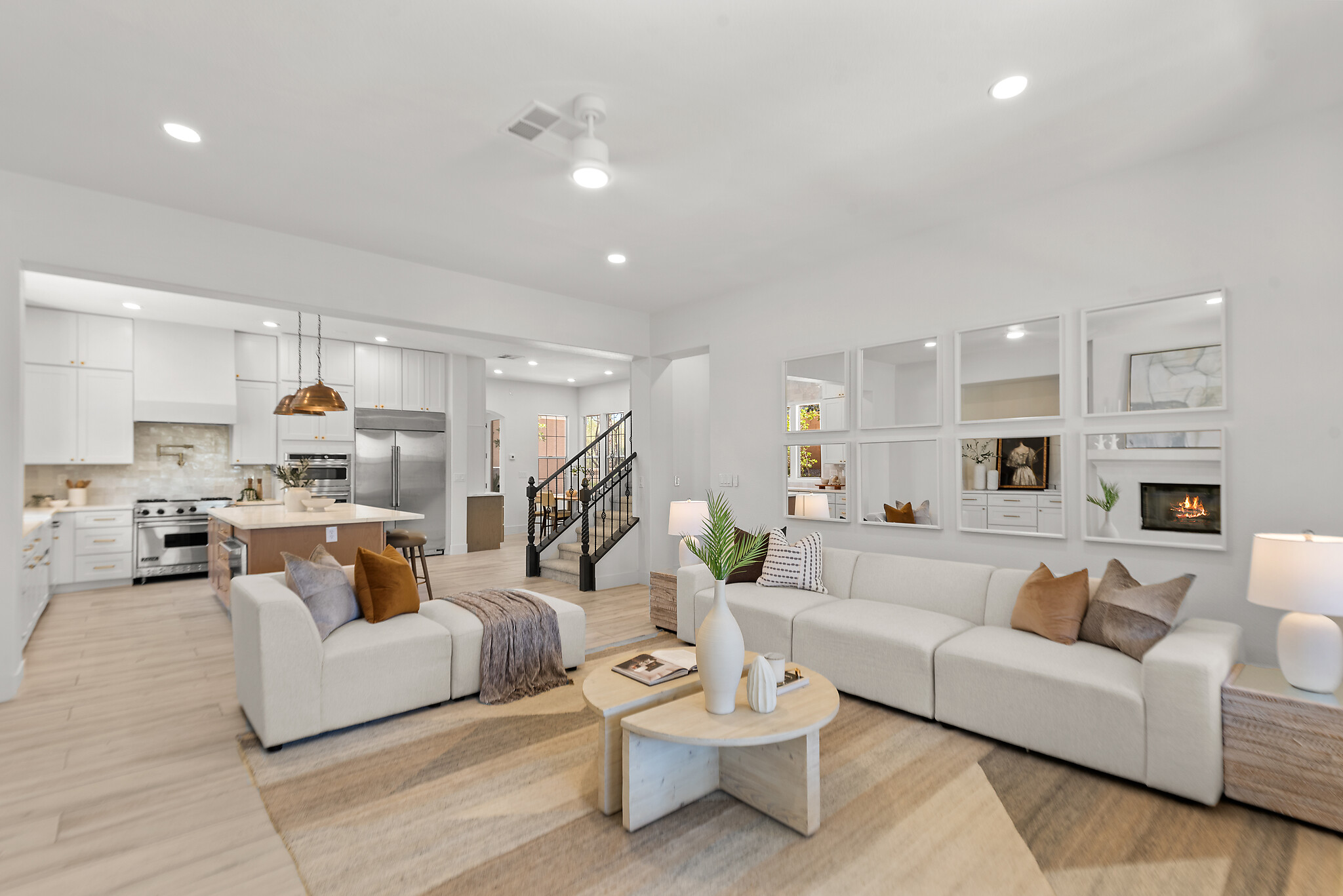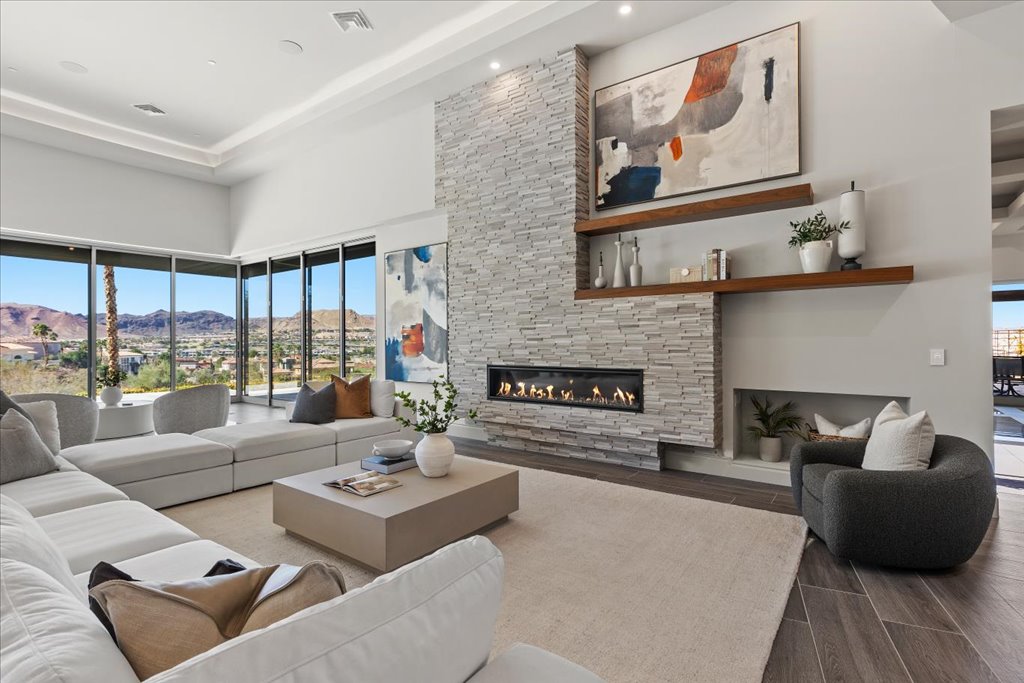

One of the most common questions we hear from sellers and agents is: “Does staging really matter as much in this market?” The short answer is yes—but the reason might surprise you. Staging ROI doesn’t decrease in a softer or buyer-leaning market. In fact, it often increases. Understanding why requires looking at how different market conditions change buyer behavior—and where sellers actually lose money when presentation is overlooked.
Understanding Market Conditions
The Three Market Types
Seller’s Market
- Low inventory
- High buyer demand
- Multiple offers are common
- Homes sell quickly, often above asking
- Buyers compete for properties
Buyer’s Market
- Higher inventory
- Buyer demand softens
- Single offers are more common
- Homes take longer to sell
- Sellers compete for buyers
Balanced Market
- Inventory and demand are relatively even
- Negotiation power is shared
- Days on market normalize
- Sale prices track close to asking
Most markets cycle through these phases. Las Vegas has experienced all three in recent years, moving from an extreme seller’s market (2021–2022) through transition and into a more buyer-favorable environment.
Staging ROI in a Seller’s Market
The “Anything Sells” Mentality
In a strong seller’s market, some sellers conclude that staging is unnecessary.
“Buyers are desperate. They’ll take anything. Why spend money on staging?”
There’s a kernel of truth here: in extreme seller’s markets, even poorly presented homes often sell. But “sells” isn’t the only metric. The real questions are how fast, at what price, and with how much negotiation.

Four Benefits of Staging in Seller’s Markets
Speed differentiation — When everything sells eventually, the staged home sells fastest. If you need to close by a specific date, speed still matters.
Price maximization — Multiple offers on a staged home often exceed offers on an unstaged comparable. Competition is fiercer when buyers are emotionally engaged.
Negotiation strength — Staged homes attract more qualified, committed buyers who are less likely to nitpick inspections or demand concessions.
Photography advantage — Even in seller’s markets, buyers shop online first. Homes with beautiful photos receive more showing requests.
Typical seller’s market staging ROI: 2–4x investment return
Staging ROI in a Buyer’s Market
The Competitive Imperative
This is where staging logic shifts fundamentally. In a buyer’s market, inventory is high and buyers are selective. They have options and can afford to wait for the right property at the right price.
In this environment, differentiation isn’t nice-to-have — it’s survival. The staged home stands out. The unstaged home blends into a sea of competing listings.
Why ROI Increases
Preventing price reductions — The most expensive outcome for sellers is price reductions. Each cut can cost $10,000, $20,000, or more. Staging that prevents even one reduction pays for itself multiple times over.
Reducing days on market — Carrying costs accumulate monthly: mortgage, taxes, insurance, utilities, and maintenance. Staging that reduces time on market by 30–60 days can save thousands in carrying costs alone.
Attracting buyers who have choices — When buyers can be selective, they gravitate toward homes that show well. The staged home gets showings; the unstaged home gets scrolled past.
Supporting list price — In buyer’s markets, pricing pressure is constant. Staging provides the presentation quality that justifies your price point.
The Math Without Staging (Buyer’s Market)
- Extended days on market: 60–120+ days common
- Multiple price reductions: $25,000–$75,000+
- Accumulated carrying costs: $15,000–$30,000+
- Weakened negotiating position
Typical buyer’s market staging ROI: 5–10x investment return
Las Vegas Market Reality in 2026
Where We Are Now
The Las Vegas market in 2026 sits closer to buyer’s market conditions than the frenzy years of 2021–2022. Key indicators include:
- Inventory has normalized, giving buyers more choices
- Days on market have extended
- Price reductions are more common
- Multiple offers are less automatic
This isn’t a crash — it’s a return to more normal market dynamics. But it does mean sellers can no longer rely on market heat to compensate for poor presentation.

What Our Data Shows
Tracking our staged properties against market performance shows consistent patterns:
- Average Days on Market: 36 days (Utopia staged homes) vs. 69 days (market average)
- Price Reductions: Minimal for staged homes; common in the broader market
- Sale-to-List Ratio: 98–99% for staged homes vs. 94–96% market-wide
The gap between staged and unstaged performance widens in softer market conditions.
Performance by Price Tier
- Under $500K — Most competitive; staging differentiates in a crowded field
- $500K–$1M — Balanced conditions; staging accelerates timeline and protects price
- $1M–$2M — Buyer selectivity increases; staging becomes more critical
- $2M+ — Luxury buyer expectations are highest; professional staging is essential
Making the Investment Decision
The Framework
Rather than asking, “Should I stage in this market?” ask:
- What is my carrying cost per month?
- What is the typical price reduction in my area?
- How many competing listings exist?
- What do my comparables look like?
The Counterintuitive Truth
Sellers in buyer’s markets often resist staging investment because they feel financially pressured.
“The market is soft — I can’t afford staging on top of everything else.”
But this reasoning is backward. Precisely because the market is soft, staging ROI is highest. The cost of not staging — extended time on market, price reductions, and carrying costs — far exceeds the staging investment.
The sellers who invest in presentation in buyer’s markets are the sellers who protect their equity.
Invest Where Returns Are Highest
Market conditions don’t reduce staging ROI — they shift where the returns appear. In seller’s markets, staging maximizes price and speed at the margin. In buyer’s markets, staging prevents substantial losses caused by extended time and price reductions.
The 2026 Las Vegas market rewards presentation quality. Sellers who understand this protect their investment.
Call Scott at 702-848-3750 or request a free estimate online to discuss staging strategy for current market conditions and your specific property.