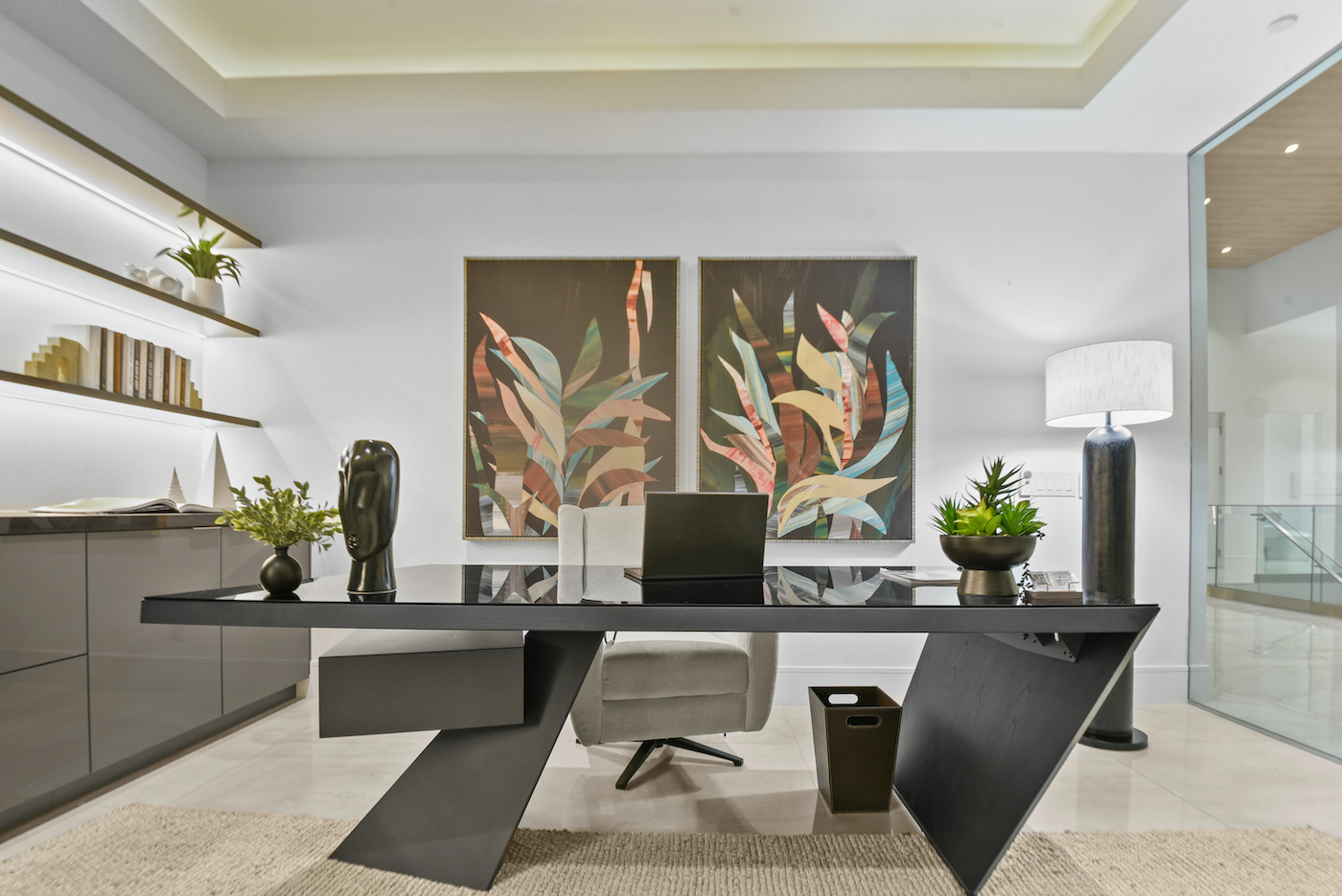
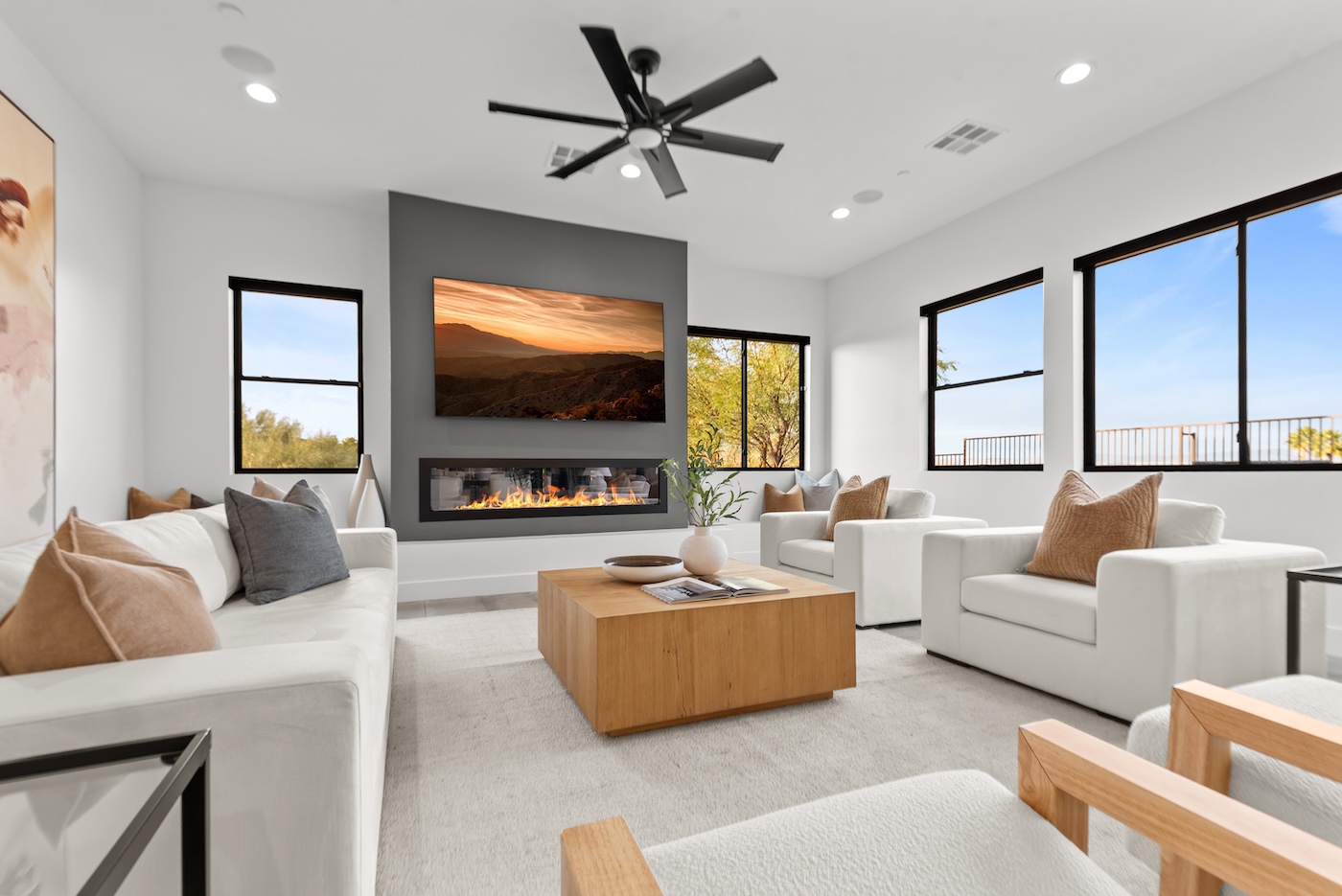
Every home has a design language.
The angles of its roofline, the rhythm of its windows, the materials chosen for its floors and walls — these elements tell a deliberate story.
When staging ignores that story, the result is visual friction buyers feel immediately, even if they cannot articulate why.
Architectural staging is the discipline of reading a home’s built environment before selecting a single piece of furniture, art, or accessory. It is the difference between decorating a space and amplifying its intent.
For sellers in Las Vegas — a market where architecture ranges from desert modern to Mediterranean revival — this distinction is not subtle. It directly impacts perceived value, buyer connection, and ultimately, how quickly a home sells.
What Architectural Staging Actually Means
Traditional staging starts with a logistical question: What do we have that fits this room?
Architectural staging starts with a strategic one: What is this room trying to say — and how do we help it say it more clearly?
Architecture is not neutral. A contemporary home with 20-foot ceilings and walls of glass is designed to feel expansive and effortless. A Mediterranean home with arches and stone is designed to feel grounded and warm. When staging contradicts those intentions, the space feels off — like a whisper in a concert hall or a shout in a library.
Strong architectural staging Las Vegas requires three things most companies overlook:
- Design literacy — understanding architectural styles and their underlying principles
- Inventory depth — access to multiple design vocabularies, not a single look
- Restraint — knowing when staging should follow, not lead
After staging nearly 100 homes per year across the Las Vegas Valley, one pattern is consistent: the best results happen when the furniture feels like it belongs in that specific home — not like it was rotated in from a warehouse.
Modern Las Vegas Architectural Styles
Las Vegas architecture has evolved far beyond the uniform stucco homes of the past. Today’s market includes a range of distinct styles, each requiring a tailored staging response.
Contemporary Desert Modern
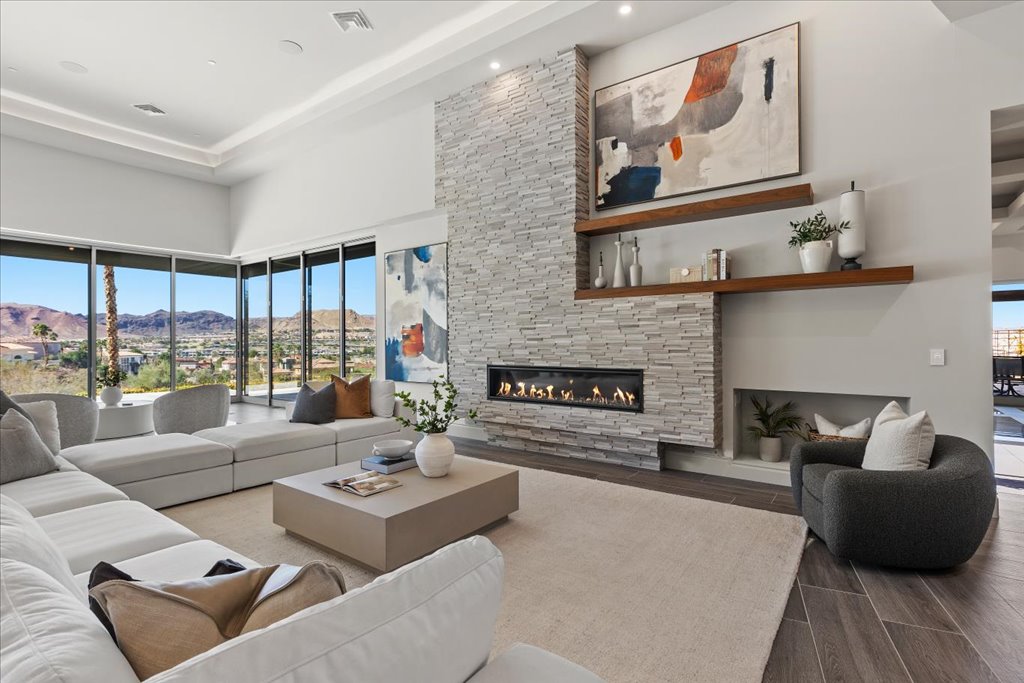
Common in MacDonald Highlands, The Ridges, and newer Henderson communities. Defined by clean lines, flat rooflines, expansive glass, and strong indoor-outdoor flow.
Staging response: Minimal, intentional, and low-profile. Neutral palettes driven by materials. Let negative space breathe.
Transitional
Common in Summerlin and newer Henderson builds. A blend of traditional structure with modern finishes.
Staging response: Balanced and layered. Classic proportions with updated textures. Avoid leaning too traditional or too modern.
Mediterranean Revival
Found in Spanish Trail, TPC Summerlin, and Southern Highlands. Characterized by arches, stucco, tile roofs, and wrought iron.
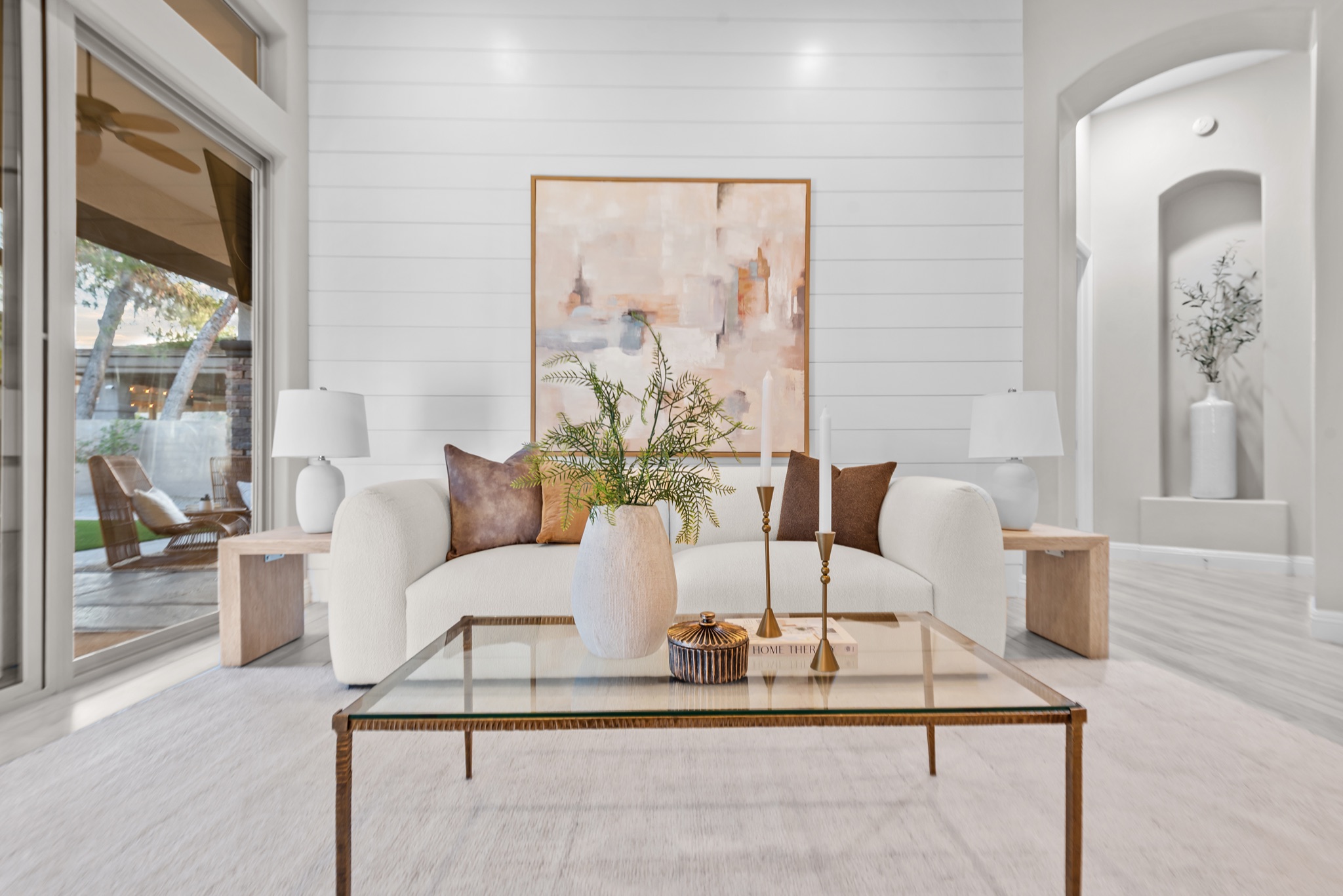
Staging response: Warm palettes, rich wood tones, and softer silhouettes. Avoid sharp modern contrasts that fight the architecture.
Mid-Century Modern
Seen in Paradise Palms, McNeil Estates, and design-inspired new builds. Known for horizontal lines, post-and-beam construction, and indoor-outdoor integration.
Staging response: Organic forms, warm woods, and selective bold accents — without turning the home into a time capsule.
Staging for Specific Architectural Features
Beyond style, individual features demand intentional staging decisions.
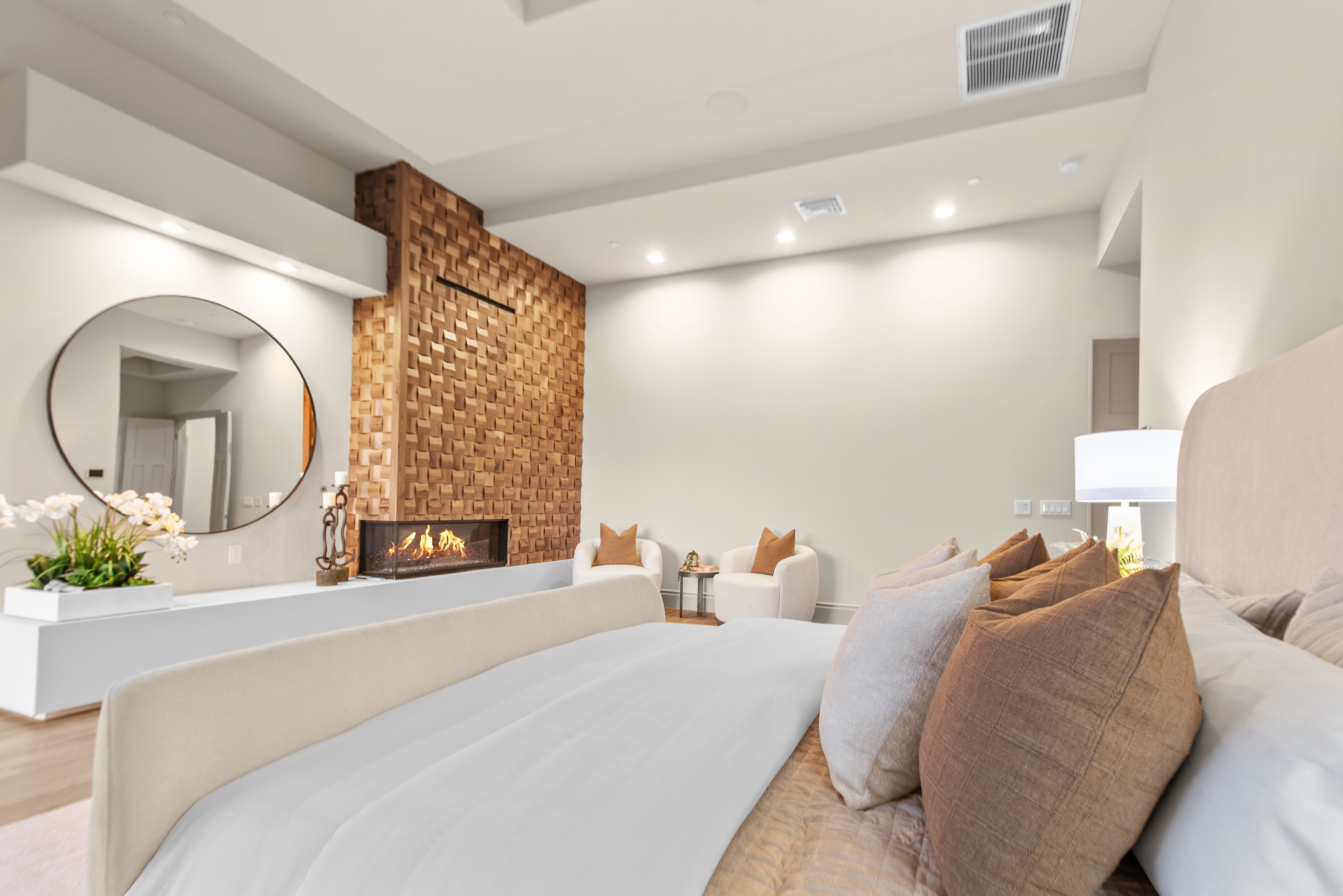
Soaring Ceilings
Use vertical elements — tall artwork, sculptural lighting, and height-driven compositions — to visually connect the volume without overfilling it.
Floor-to-Ceiling Glass
The view is the focal point. Furniture should orient toward it, never block it.
Open Floor Plans
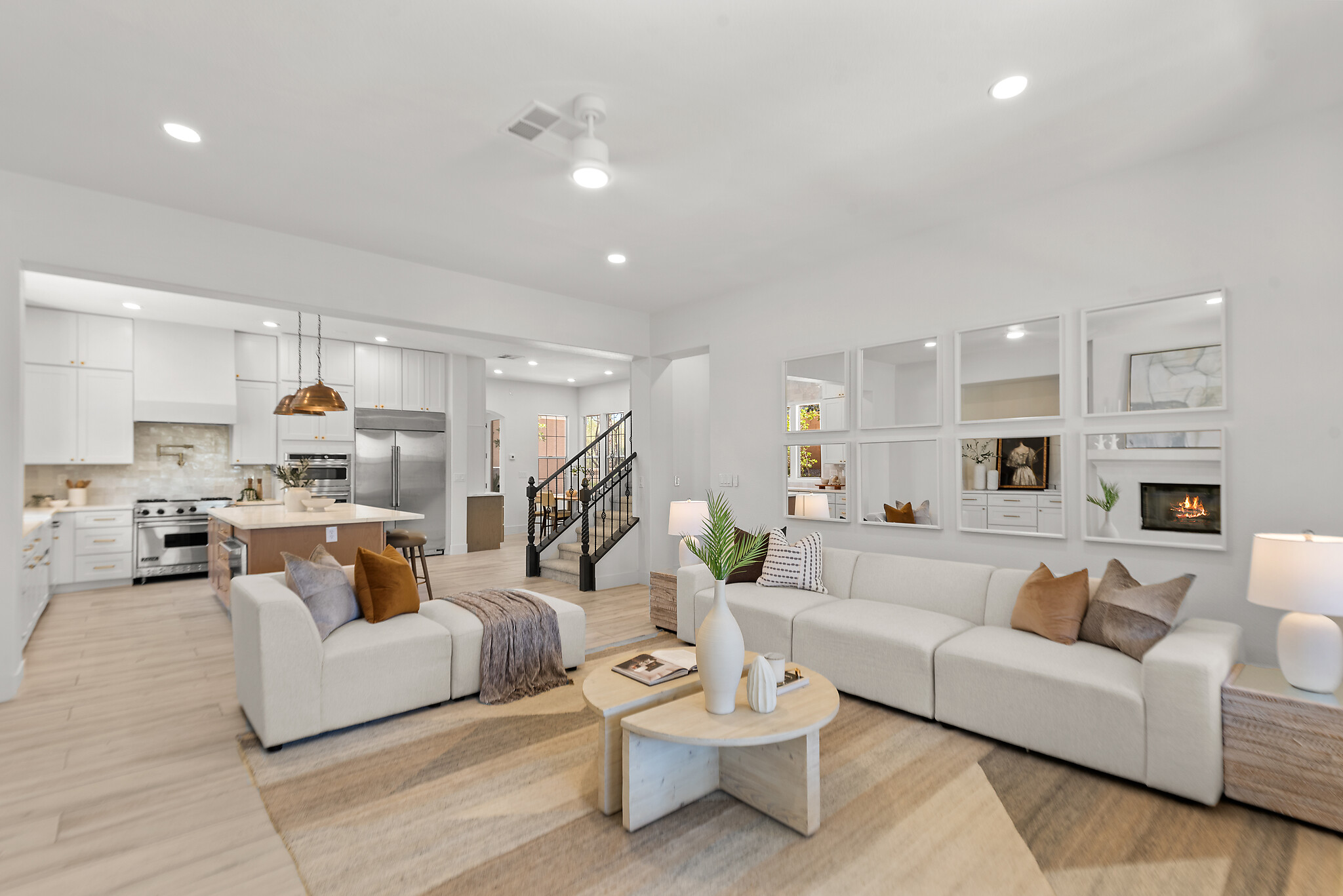
Define functional zones through layout, not walls. The space should feel organized but still expansive.
Indoor-Outdoor Flow
Extend the design language outside. Empty patios signal an incomplete home at the luxury level.
The Desert Context: Architectural Staging Las Vegas
Las Vegas introduces environmental variables that directly influence staging outcomes.
Light intensity. Desert light is strong and unforgiving. Materials, tones, and finishes must be chosen with precision to avoid harshness or washout.
Views. Whether Strip, mountain, or golf course, views should be framed — not interrupted.
Natural palette. Sand, stone, and desert tones should inform the design without overwhelming it.
Outdoor living. Outdoor areas are not optional — they are part of the living space and must be staged accordingly.
5 Principles of Architectural Staging
1. Scale
Every element must match the proportions of the space.
2. Palette Harmony
Colors and materials should align with the home’s existing finishes.
3. Focal Point Framing
Furniture placement should direct attention to architectural highlights.
4. Flow Enhancement
Layouts should support natural movement through the home.
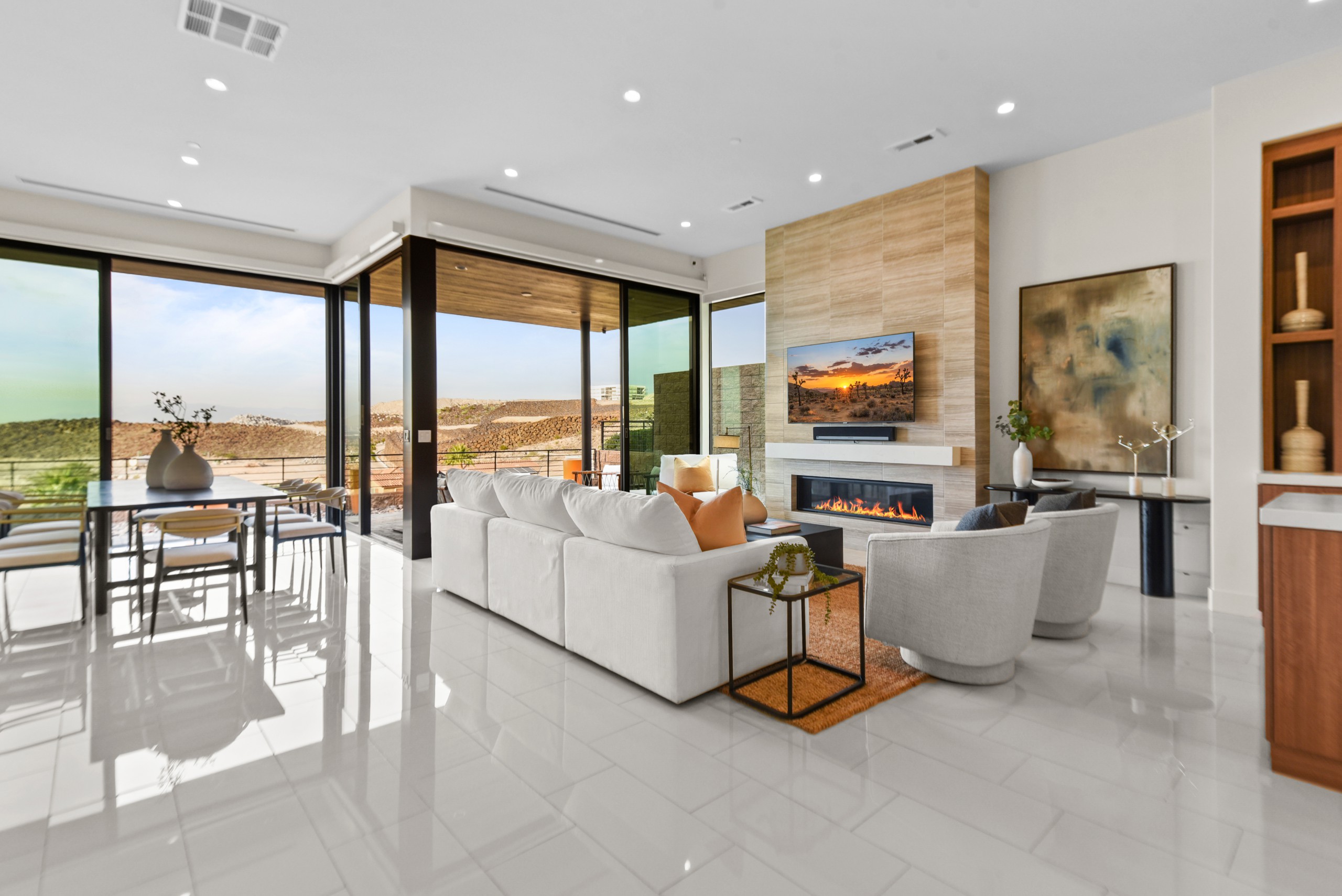
5. Material Dialogue
Staging materials should complement — not compete with — the home’s surfaces.
When Staging Fights the Architecture
Poor staging does more than underperform — it can actively reduce perceived value.
Common mistakes include blocking key views, using incorrect scale, mixing incompatible styles, ignoring sight lines, and overfilling or underfurnishing spaces.
Buyers feel these issues instantly, even if they cannot explain them.
In fact, according to the National Association of Realtors, 63% of seller’s agents say design quality is the most important factor when choosing a staging company — ranking above price.
Where Architectural Staging Las Vegas Matters Most
Certain luxury communities demand a higher level of architectural sensitivity due to their strong design identity:
- MacDonald Highlands — bold contemporary homes with Strip views
- The Ridges — desert modern with glass, steel, and stone
- Summerlin custom communities — diverse architectural expression
- Southern Highlands — mixed styles requiring adaptability
- Ascaya — ultra-contemporary, architecturally ambitious homes
In these areas, staging that responds to the home — not a template — is often the difference between a listing that sits and one that sells.
The Architectural Staging Process
At Utopia Home Staging, the process begins with architecture — not furniture.
Each project starts with a walkthrough focused on light, sight lines, materials, and spatial flow. Only after understanding the home do we begin selecting pieces.
Led by NYIAD-trained designer Angelic Ferguson, our design-first approach ensures that every staging plan is tailored to the home, the buyer, and the market.
This methodology has supported over $1 billion in Las Vegas real estate sales and earned recognition including 11 HGTV features and Best of Las Vegas 2025.
Final Thoughts
A well-designed home already knows what it wants to be. Architectural staging simply allows it to speak clearly.
When staging aligns with architecture, the result is effortless. When it fights it, the disconnect is immediate — and costly.
In a competitive luxury market like Las Vegas, respecting the design intent of the home is not just good design. It is a strategic advantage.
Call Scott at 702-848-3750 or request a free estimate online to discuss how architectural staging can position your listing to sell faster and for more.