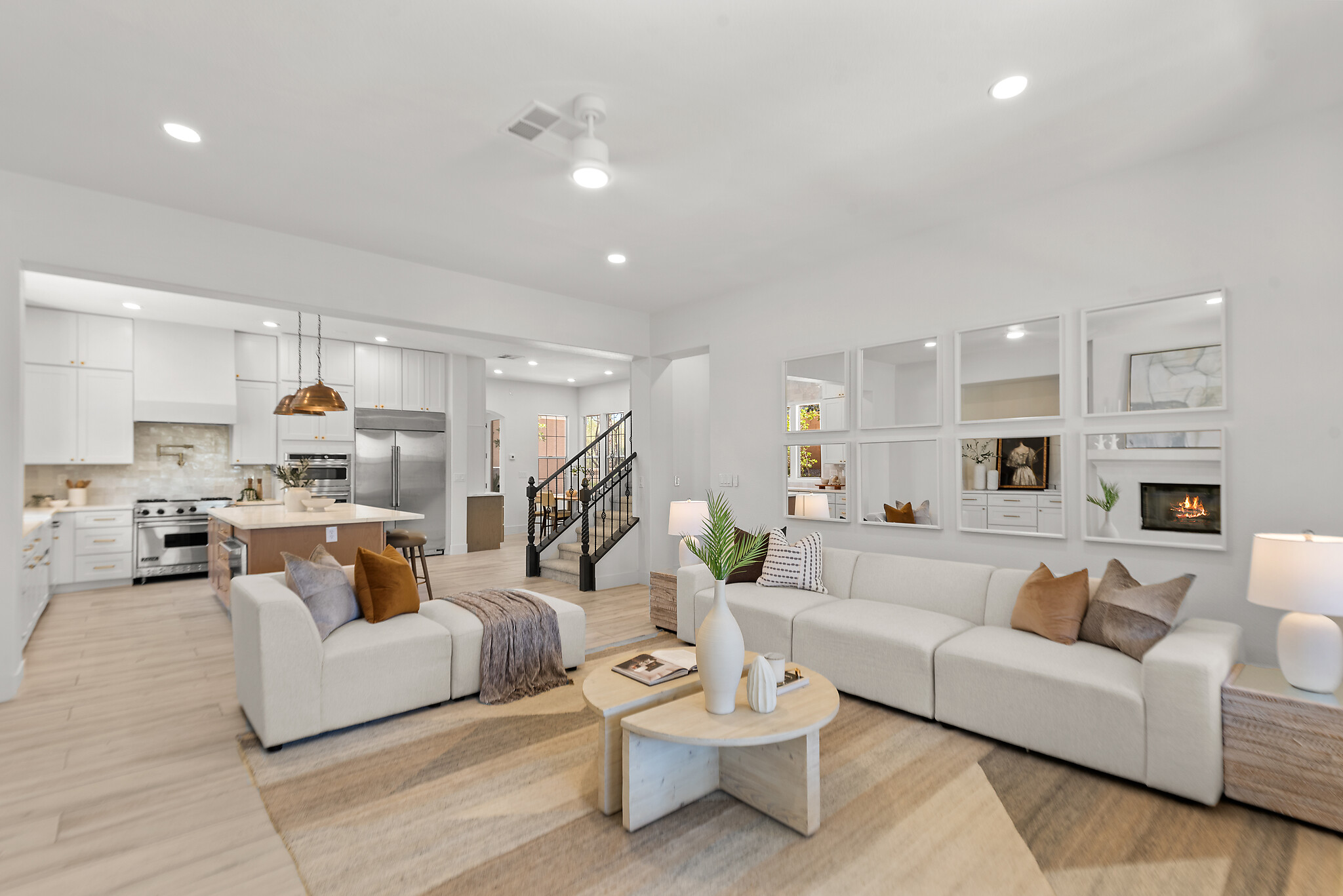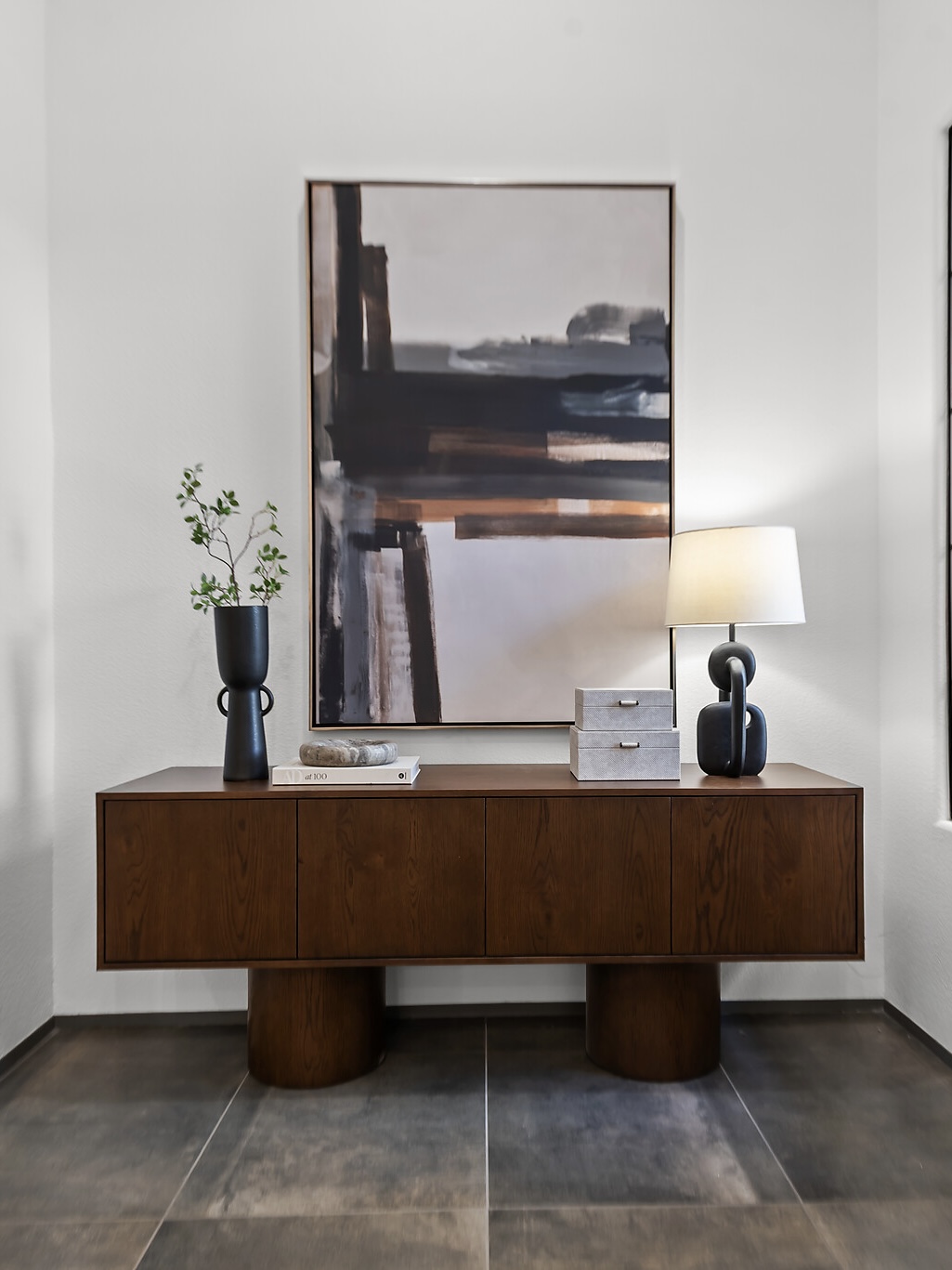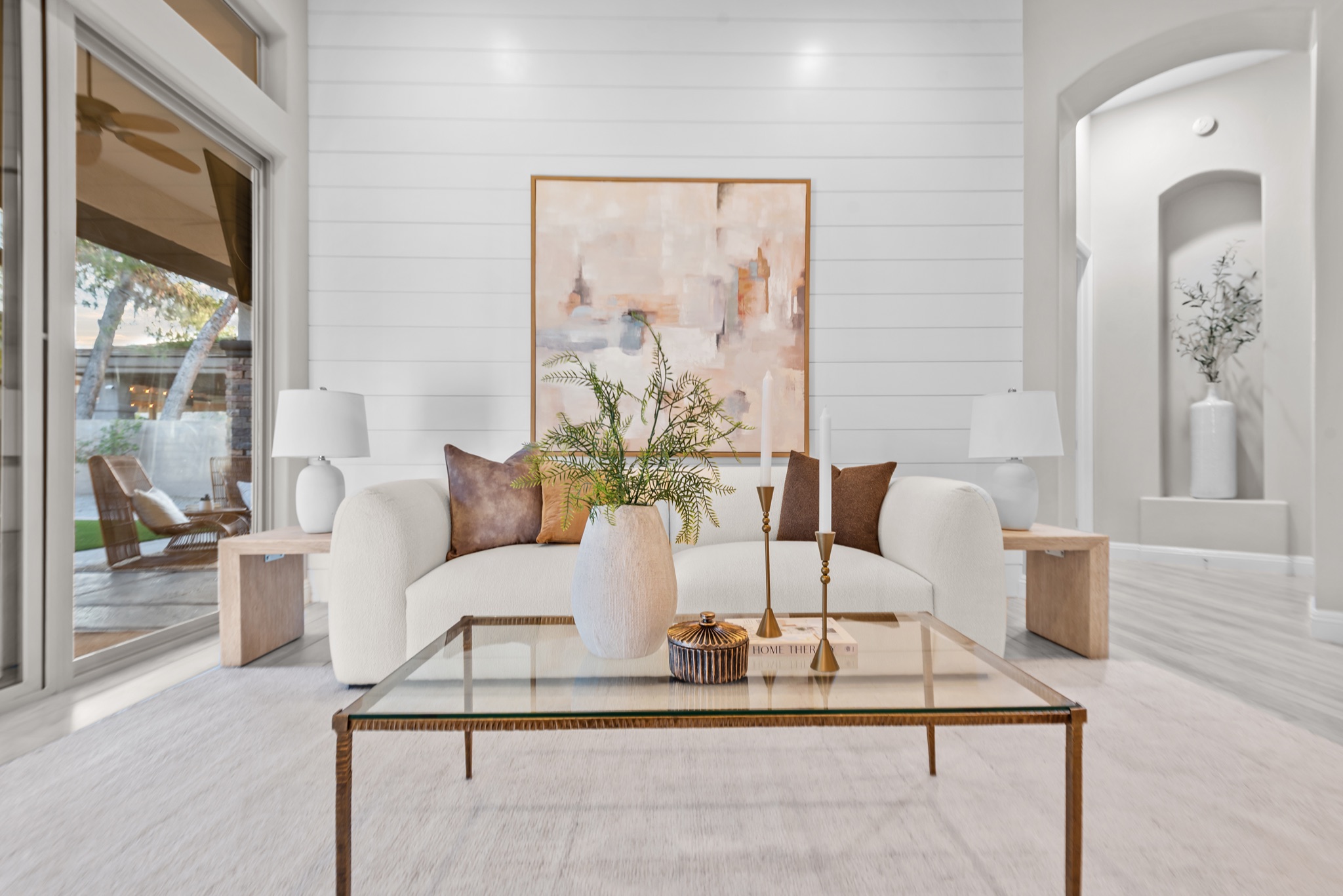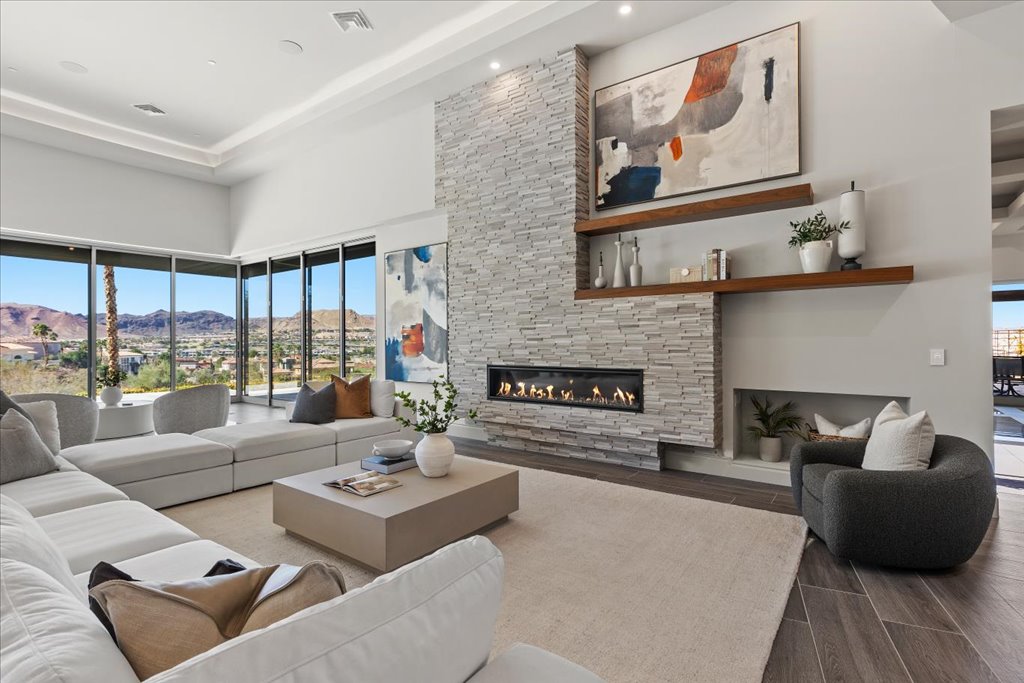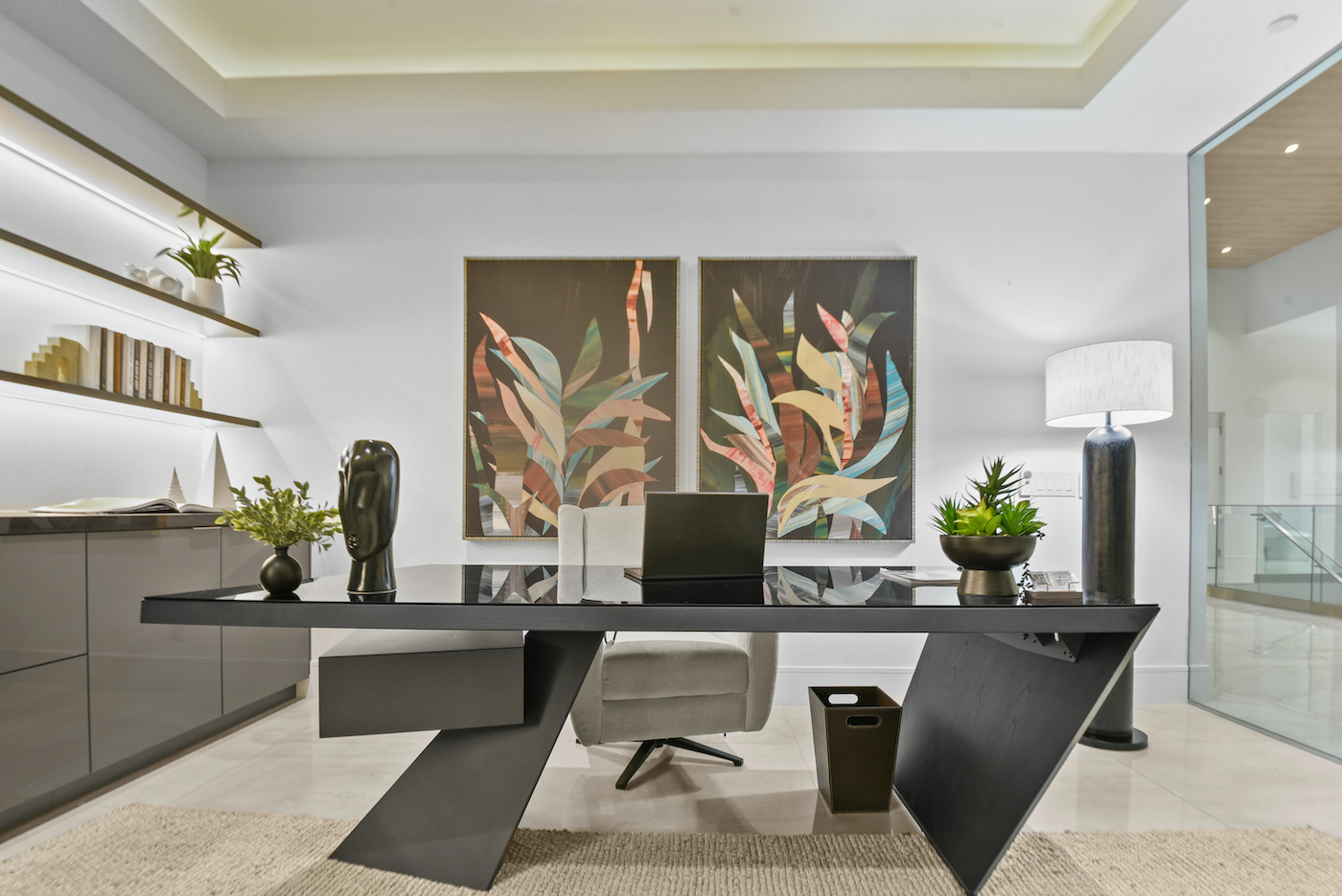
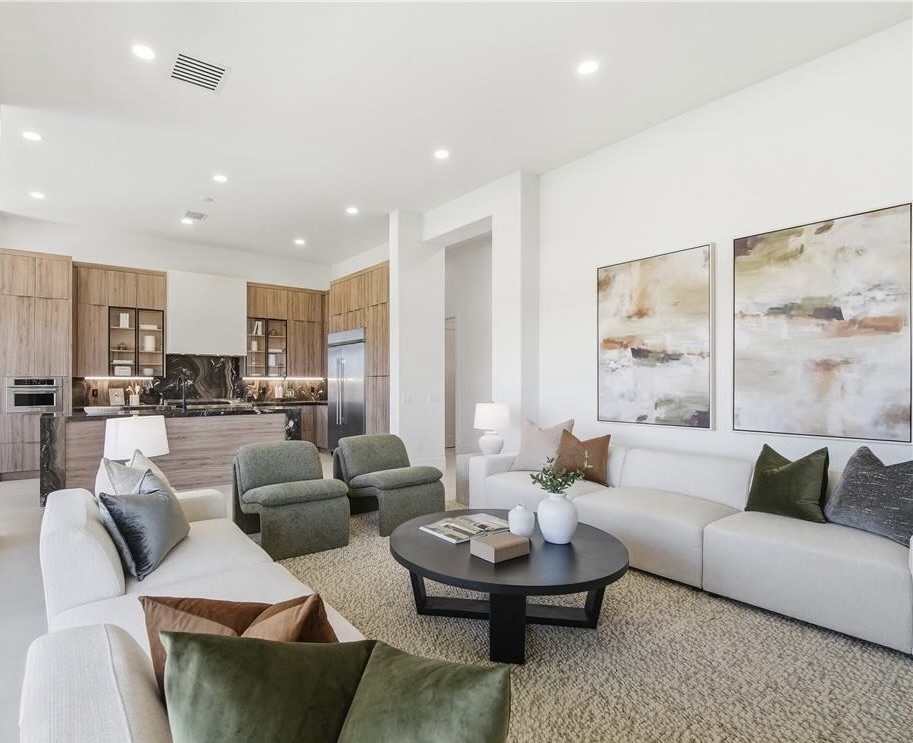
Las Vegas staging trends show this market isn’t just a smaller slice of the national market — it plays by its own rules. Home staging has become standard across the country: the National Association of Realtors reports that 81% of buyers’ agents say staging helps clients visualize a property as their future home, and staged homes typically sell for 1–5% more than comparable unstaged listings.
But national averages only tell part of the story.
Las Vegas is not a typical market. What works in Chicago, Atlanta, or Portland doesn’t always translate to the desert Southwest. After staging hundreds of homes across Las Vegas—from Summerlin to Henderson—we’ve seen consistent differences between national trends and local reality.
Here are seven ways Las Vegas staging stands apart from national norms.
How Las Vegas Staging Compares to National Data
According to the NAR 2025 Profile of Home Staging:
- 81% of buyers’ agents say staging helps buyers visualize the home
- Staged homes sell for 1–5% more on average
- Most commonly staged rooms: living room (37%), primary bedroom (34%), kitchen (23%)
- 63% of agents rank design quality as the most important factor when choosing a stager
- 49% of sellers’ agents say staging reduces time on market
This is the national baseline. Las Vegas operates with a different set of expectations.
7 Ways Las Vegas Staging Differs From National Norms
1. Outdoor Living Is Essential, Not Optional
Nationally, outdoor staging is often treated as an afterthought.
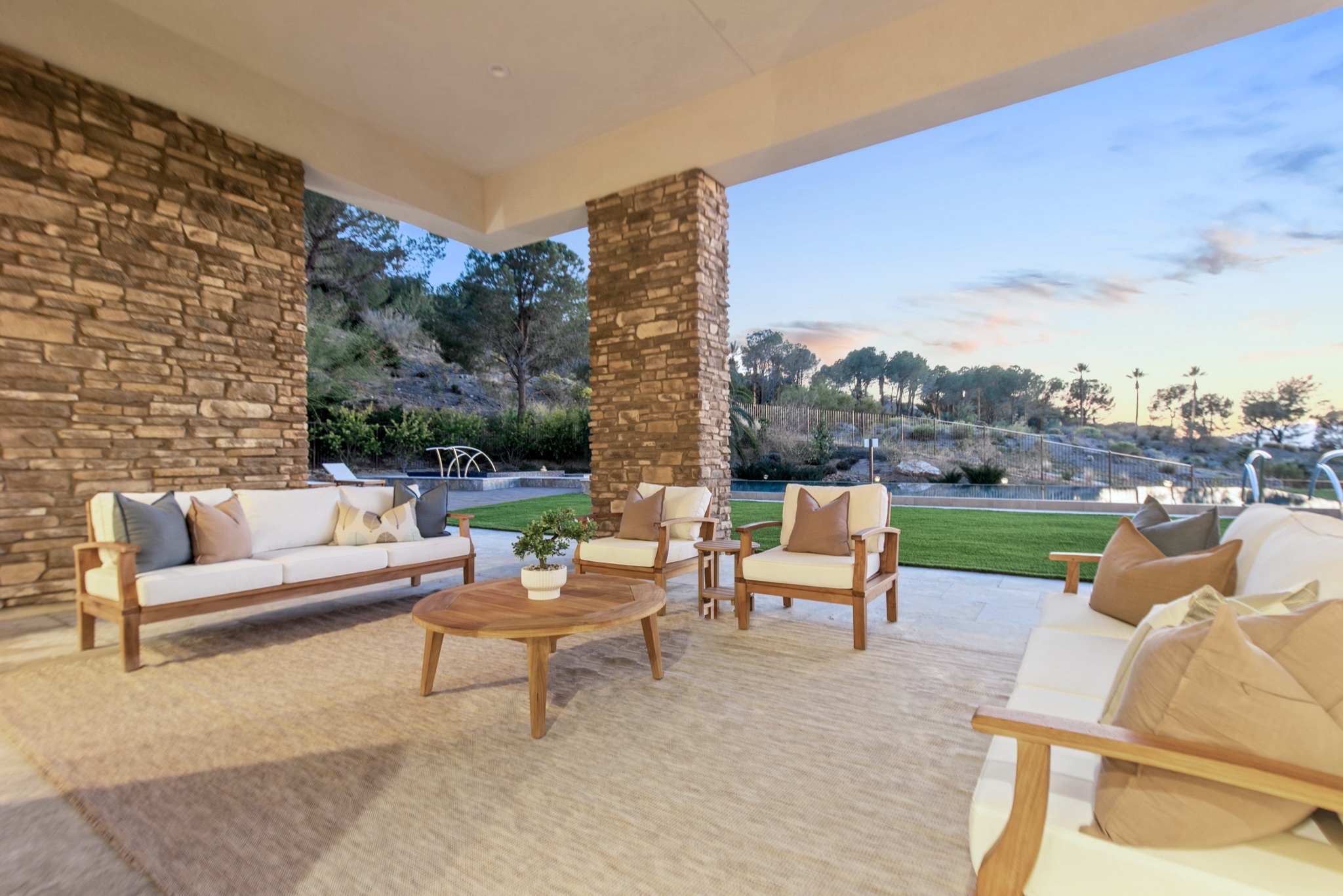
In Las Vegas, it is a core selling feature.
With over 300 days of sunshine each year, patios, pool decks, and outdoor kitchens function as true extensions of the home. Buyers expect these spaces to be fully realized—not empty.
An unstaged exterior in Las Vegas feels incomplete.
2. The Investor and Flip Market Sets the Pace
Las Vegas has a strong investor presence, and professional flippers treat staging as a standard line item—not a luxury upgrade.
This creates a ripple effect.
When buyers tour multiple staged homes, an unstaged listing immediately feels like a step down. The baseline expectation shifts, and staging becomes the norm rather than the exception.
If you’re considering skipping staging to save money, it’s worth understanding why cheaper staging options often cost more in the long run.
3. Luxury Expectations Are Higher
The $2M+ segment in Las Vegas has expanded rapidly, particularly in communities like The Summit, Ascaya, and MacDonald Highlands.
Buyers at this level often compare homes to luxury hospitality environments—Wynn, Bellagio, Encore-level presentation.
What passes as “luxury staging” in other cities can feel underwhelming here. In Las Vegas, elevated design is not a differentiator—it is the standard.
For a deeper breakdown of what drives results at this price point, see what makes a $2M home sell.
4. Seasonality Exists—But It’s Milder
In colder markets, staging demand drops sharply in winter and surges in spring.
Las Vegas behaves differently.
There is a noticeable cooling period from mid-December through February, driven by holidays, travel, and slower buyer activity. However, the market does not shut down—transactions still occur, and well-prepared listings continue to perform.
This creates a strategic advantage.
Sellers who stage properly during this window often face less competition and can capture serious, motivated buyers.
5. Relocation Buyers Depend on Photos
A significant percentage of Las Vegas buyers are relocating—many from California.
That means the first showing happens online.
Every room must perform in photos. Lighting, composition, depth, and contrast become just as important as the in-person experience.
If the photos don’t compel, the showing never happens.
6. New Construction Raises the Bar
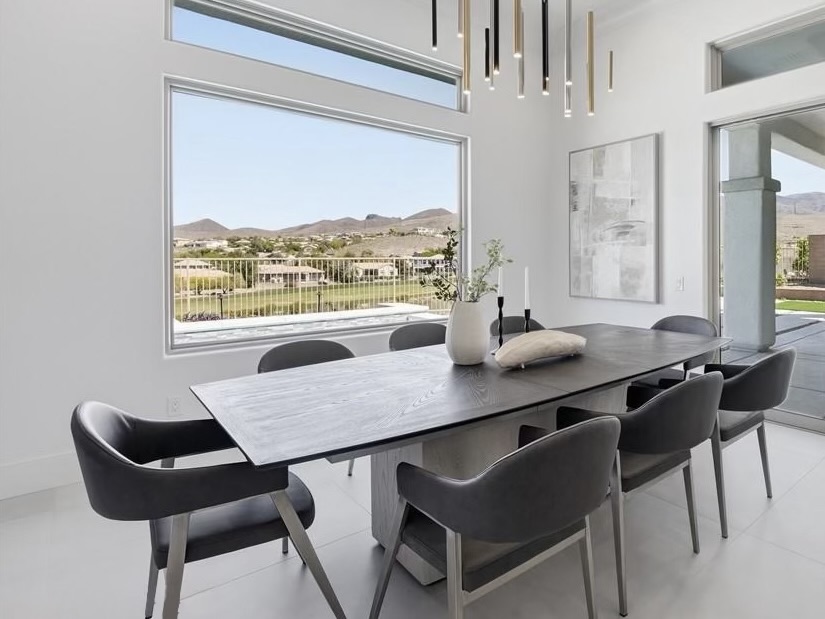
Las Vegas has a strong new construction pipeline, and builders invest heavily in model homes with high-end staging.
Resale listings are competing directly with those polished, professionally merchandised spaces.
That comparison elevates buyer expectations—and makes vacant or poorly staged homes stand out immediately.
7. Desert Aesthetics Drive Design Decisions
National trends lean toward soft neutrals and organic textures.
Las Vegas builds on that—but adapts it to the desert environment.
- Intense natural light influences color selection
- Indoor-outdoor flow shapes layout decisions
- Earth tones reflect the surrounding landscape
Staging that ignores this context can feel disconnected. The strongest designs create continuity between the interior and the desert surroundings.
Where Las Vegas Leads (and Lags)
Where Las Vegas leads:
- Luxury staging quality
- Outdoor living integration
- Investor adoption of staging
- Photo-first staging strategy
Where Las Vegas lags:
- Mid-market staging adoption ($300K–$600K often treated as optional)
- Occupied staging usage
This gap creates opportunity.
When competitors skip staging, a well-presented home stands out even more.
The California Effect
Many Las Vegas buyers relocate from Los Angeles, the Bay Area, and Orange County.
They bring elevated expectations:
- Fully staged homes
- Lifestyle-driven presentation
- Strong, editorial-quality photography
When these buyers encounter an unstaged or under-staged property, the difference is immediate.
As migration continues, these expectations will only rise.
What This Means for Las Vegas Sellers
If you’re selling in Las Vegas, the strategy should reflect the market:
- Stage outdoor spaces—they are part of the home, not an add-on
- Think photo-first—your listing is judged online before anything else
- Study your competition—including builder model homes
- Work with a local expert who understands Las Vegas buyer psychology
If you want to understand how staging should align with the home itself, explore architectural staging and design intent.
Las Vegas is a sophisticated staging market with its own rules. Aligning with those expectations gives your listing a measurable advantage.
Las Vegas Staging Trends: Key Takeaways for Sellers
National staging data provides a useful baseline—but it doesn’t capture the nuance of local markets.
Las Vegas is faster, more visual, more design-driven, and more competitive than most.
The listings that succeed here are not just staged—they are positioned.
Discuss Your Las Vegas Staging Strategy
Call Scott at 702-848-3750 or request a free estimate online to discuss a staging strategy tailored to your Las Vegas property and neighborhood.